


- All
- Product Name
- Product Keyword
- Product Model
- Product Summary
- Product Description
- Multi Field Search
Views: 0 Author: Site Editor Publish Time: 2025-10-24 Origin: Site
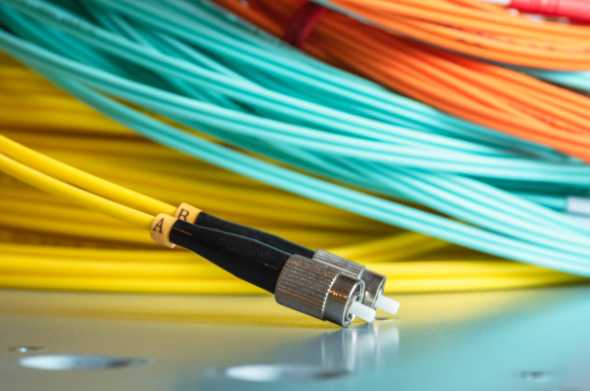
In the rapidly evolving world of telecommunications, Fiber to the X (FTTX) projects have become the cornerstone of high-speed internet deployment, especially in outdoor environments where reliability and efficiency are paramount. As we step into 2025, the demand for seamless connectivity in urban, rural, and industrial settings has never been higher. But one often overlooked yet critical component in these installations is the fiber optic jumper—also known as a patch cord or jumper cable. Why does your outdoor FTTX project need to use jumpers? The answer lies in their role as the flexible connectors that bridge equipment, ensure signal integrity, and facilitate easy maintenance in harsh outdoor conditions.
As a leading comprehensive cabling manufacturer based in China, ZORA (www.zoracz.com) specializes in high-quality fiber optic solutions, including outdoor-rated jumpers designed specifically for FTTX applications. Our products are engineered to withstand extreme weather, provide low-loss connections, and support the latest standards like ITU-T G.657 for bend-insensitive fibers. In this in-depth blog, we'll explore the technical necessities of jumpers in outdoor FTTX projects, their benefits, implementation best practices, and future trends. By the end, you'll understand why skipping jumpers could compromise your project's performance and longevity.
FTTX encompasses a family of fiber optic architectures, such as Fiber to the Home (FTTH), Fiber to the Building (FTTB), and Fiber to the Curb (FTTC), aimed at delivering ultra-fast broadband directly to end-users. In outdoor scenarios, these projects involve deploying fiber cables across streets, poles, underground conduits, and aerial routes, often exposed to elements like rain, UV radiation, temperature fluctuations, and physical stress.
A fiber optic jumper is a short, pre-terminated cable with connectors (e.g., SC, LC, or FC) on both ends, used to connect network devices, distribution boxes, or optical distribution frames (ODF). Unlike main fiber cables that run long distances, jumpers act as "patch" links for the final few meters of connection. In outdoor FTTX, they are indispensable for several reasons:
1. Flexibility in Network Configuration: Outdoor FTTX setups require adaptability. Jumpers allow installers to easily connect splitter boxes, optical network terminals (ONTs), or splice enclosures without splicing long cables on-site. This modularity reduces installation time and errors.
2. Protection Against Environmental Hazards: Outdoor environments pose risks like moisture ingress, dust, and mechanical strain. ZORA's outdoor jumpers feature ruggedized jackets (e.g., PE or LSZH materials) and IP67-rated waterproof connectors, ensuring reliable performance in temperatures from -40°C to +85°C.
3. Signal Integrity and Low Loss: Jumpers minimize insertion loss (typically <0.2 dB for ZORA products) and return loss (>55 dB), preserving signal quality over the last hop. In FTTX, where data rates can exceed 10 Gbps, even minor losses can degrade service.
Without jumpers, you'd rely on direct splicing, which is time-consuming, requires skilled labor, and increases vulnerability to faults. Jumpers provide a plug-and-play solution, making them essential for scalable, maintainable networks.
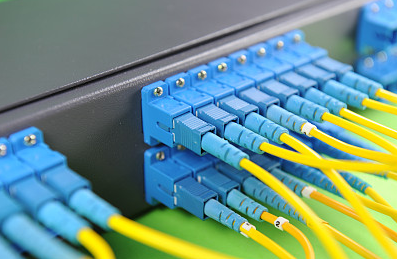
Delving deeper, let's examine the engineering rationale behind using jumpers in outdoor FTTX projects. Fiber optics transmit data via light pulses, and any disruption in the path can cause attenuation or reflection, leading to packet loss or downtime.
In an outdoor FTTX topology, the network starts from the central office (CO) with optical line terminals (OLTs), extends via feeder cables to distribution points, and branches out through drop cables to premises. Jumpers are used at key junctions:
l At Splitter Boxes: Passive optical network (PON) splitters divide signals for multiple users. ZORA's LC/APC jumpers connect the splitter output to drop cables, ensuring angled polish connectors reduce reflections.
l In Splice Enclosures: Outdoor enclosures protect splices from weather. Jumpers link the enclosure's pigtails to ONTs, allowing quick swaps if a device fails.
l For Testing and Maintenance: Jumpers facilitate OTDR (Optical Time-Domain Reflectometer) testing by providing access points without disturbing the main cable.
Without jumpers, reconfiguring these interfaces would involve cutting and resplicing fibers, risking contamination and higher losses.
Outdoor FTTX faces unique challenges:
l Weather Resistance: Rain, snow, and humidity can corrode connectors. ZORA's armored jumpers incorporate stainless steel braiding and gel-filled designs to prevent water penetration.
l Mechanical Stress: Aerial deployments endure wind and vibration. Our jumpers comply with IEC 61753 standards for tensile strength (>100 N) and crush resistance.
l UV and Chemical Exposure: Prolonged sun exposure degrades materials. ZORA uses UV-stabilized polyethylene jackets for longevity.
A study by the Fiber Broadband Association indicates that 70% of outdoor fiber failures stem from connector issues—jumpers mitigate this by isolating vulnerable points.
With 5G integration and IoT proliferation, FTTX must handle symmetric speeds up to 50 Gbps. Jumpers enable this by:
l Bend Insensitivity: ZORA's G.657.A2 fibers allow tight bends (radius <7.5 mm) without loss, ideal for compact outdoor enclosures.
l Multi-Fiber Configurations: Our MPO/MTP jumpers support parallel optics for data centers feeding FTTX hubs.
l Compatibility: Backward-compatible with legacy systems while ready for NG-PON2 (Next-Generation PON).
Omitting jumpers forces rigid connections, limiting upgrades and increasing costs over time.
Incorporating jumpers yields tangible advantages, transforming your project from functional to exceptional.
Initial costs for jumpers are low (ZORA offers competitive pricing starting at $5 per unit), but savings accrue through:
l Reduced Labor: Plug-and-play installation cuts deployment time by 40%.
l Lower Downtime: Quick replacements minimize service interruptions, crucial for SLAs (Service Level Agreements).
l Scalability: Add users without overhauling infrastructure.
Jumpers ensure consistent signal quality:
l Low Attenuation: ZORA's single-mode jumpers achieve <0.1 dB insertion loss.
l Error-Free Transmission: High return loss prevents back-reflections that cause bit errors.
l Redundancy: Dual jumpers in ring topologies provide failover paths.
In outdoor settings, this translates to fewer customer complaints and higher QoS (Quality of Service).
Outdoor FTTX spans vast areas, making access challenging. Jumpers simplify:
l Modular Repairs: Swap a faulty jumper without tools.
l Visual Inspection: Color-coded connectors (e.g., blue for single-mode) speed identification.
l Remote Monitoring: Integrate with ZORA's smart ODFs for real-time diagnostics.
ZORA jumpers meet RoHS, REACH, and UL standards, ensuring environmental safety. In outdoor projects, they reduce fire risks with flame-retardant materials.
To maximize benefits, follow these guidelines when using ZORA products.
l Assess site conditions: Choose armored jumpers for aerial, non-armored for conduits.
l Calculate lengths: ZORA offers custom lengths from 1m to 50m.
l Select connectors: SC/APC for PON, LC for high-density.
l Prepare surfaces: Clean connectors with ZORA's fiber cleaning kits.
l Route carefully: Avoid sharp bends; use strain relief boots.
l Secure enclosures: Mount in weatherproof boxes.
l Test immediately: Use power meters to verify loss <0.3 dB.
l Schedule inspections: Quarterly checks for wear.
l Stock spares: ZORA's bulk packs ensure availability.
l Train teams: Our online resources at www.zoracz.com include tutorials.
Common pitfalls: Over-tightening connectors (causes micro-bends) or ignoring polarity in duplex jumpers.
By 2025 and beyond, FTTX will integrate with 6G, edge computing, and smart cities. Jumpers will evolve:
l Intelligent Jumpers: Embedded sensors for auto-diagnostics.
l Sustainable Materials: ZORA's bio-based jackets reduce carbon footprint.
l Higher Speeds: Support for 100 Gbps with hollow-core fibers.
l Automation: Robotic installation for large-scale projects.
ZORA is at the forefront, investing in R&D to meet these demands. Visit www.zoracz.com for our latest innovations.
In summary, jumpers are not optional in outdoor FTTX projects—they are essential for flexibility, durability, performance, and cost savings. By bridging critical connections and protecting against environmental threats, they ensure your network thrives. As a trusted supplier, ZORA offers premium jumpers tailored to your needs, backed by rigorous testing and global standards.
Don't compromise on connectivity. Explore our full range at www.zoracz.com, request a quote, or contact our experts for customized solutions. Whether you're planning a new deployment or upgrading an existing one, ZORA jumpers will power your success in the fiber optic era.

