


- All
- Product Name
- Product Keyword
- Product Model
- Product Summary
- Product Description
- Multi Field Search
Views: 0 Author: Site Editor Publish Time: 2026-04-03 Origin: Site
Driven by the global "dual carbon" goals and the rapid development of the digital economy, data centers have become a key area for energy consumption and carbon emission control. As the "digital nervous system" of data centers, structured cabling, although not directly generating computing power, significantly reduces PUE (power utilization efficiency) and reduces carbon emissions throughout the entire life cycle through optimizing air flow organization, reducing transmission losses, increasing space density, extending facility lifespan, and supporting intelligent operation and maintenance. It is an indispensable basic support for carbon-neutral data centers. This article systematically analyzes the contribution of structured cabling to the energy efficiency, carbon reduction, green materials, and circular economy of data centers. Combined with typical technical solutions and implementation cases, it proposes structured cabling design and implementation strategies for carbon neutrality, providing practical technical references for the construction of large-scale, intelligent computing green data centers.
I. Core Requirements of Carbon Neutral Data Centers and the Positioning of Structured Cabling
1.1 Sources of Carbon Emissions in Data Centers and Key Paths for Emission Reduction
The carbon emissions of data centers are mainly divided into Scope 1 (direct emissions), Scope 2 (indirect emissions from purchased electricity), and Scope 3 (emissions throughout the entire life cycle of the supply chain, construction, and operation and maintenance). Among them, IT equipment, refrigeration systems, and power supply systems account for over 90% of the total energy consumption. PUE is the core indicator for measuring energy efficiency. Reducing PUE, improving the utilization rate of renewable energy, and promoting low-carbon design throughout the entire life cycle are the core directions for achieving carbon neutrality.
Traditional extensive wiring often leads to problems such as messy cables, blocked channels, poor heat dissipation, excessive redundancy, and frequent replacement, which directly increase the cooling load and equipment power consumption, while generating a large amount of construction and waste carbon emissions. Structured cabling, with modularization, standardization, scalability and ease of management at its core, connects the entire chain from energy efficiency optimization, low-carbon material selection to recycling and reuse at the physical layer, becoming the underlying infrastructure for the low-carbon transformation of data centers.
1.2 The low-carbon value positioning of structured cabling
Structured cabling does not directly generate electricity or provide cooling, but achieves three major low-carbon values through physical layer optimization:
- Improving air flow and heat dissipation, reducing air conditioning energy consumption, and directly lowering PUE;
- Reducing signal loss, decreasing the power output of optical/electrical equipment and the number of repeaters, and reducing IT load energy consumption;
- Modular and long-life design, reducing repetitive construction, cable waste, and electronic waste, and lowering Scope 3 carbon emissions.
In new scenarios such as high-density intelligent computing centers and liquid-cooled data centers, structured cabling is one of the key conditions for achieving a PUE (Power Usage Effectiveness) of 1.2 or even approaching 1.08.
II. The Direct Contribution of Structured Cabling to Energy Efficiency Improvement in Data Centers
2.1 Optimizing Airflow Organization to Reduce Cooling System Energy Consumption
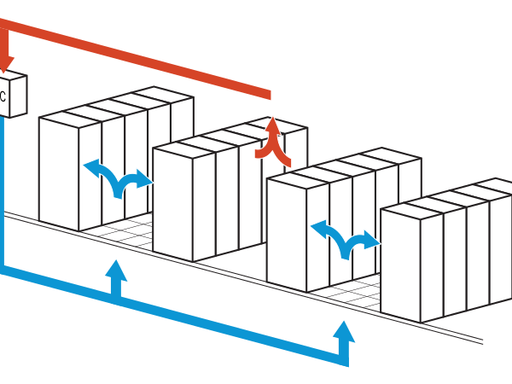
Cooling energy consumption typically accounts for 30% - 50% of the total energy consumption of a data center. Cable layout is a key influencing factor for airflow organization.
- Standardize cable trays and wiring to avoid blockage of cold and hot aisles, eliminate local hotspots, and the temperature at the cabinet intake can be reduced by 3 - 8℃;
- Sealing the cold aisle + high-density wiring can reduce heat loss by 20% - 30%, and the air conditioning load decreases simultaneously;
- Liquid cooling cabling combined with micro-channel cooling design further improves heat dissipation efficiency and reduces reliance on air cooling.
Industry tests have shown that high-quality structured cabling can directly reduce the total energy consumption of data centers by 2% to 5%, and large-scale IDCs can save up to hundreds of millions of kilowatt-hours of electricity annually.
2.2 Low-loss transmission, reducing the active power consumption of IT equipment
The higher the transmission loss, the more the switches, servers and optical modules need to increase their transmission power to compensate for the attenuation, directly increasing the energy consumption.
- Low-loss optical fibers, high-precision MPO connectors, and low-crosstalk copper cables can reduce link loss by 0.3–0.5 dB;
- Reducing the use of repeaters and amplifiers, the power consumption of a single node decreases by 10%–30%;
- High-density pre-terminated solutions reduce the number of jumpers, lowering port power consumption and heat dissipation pressure.
In the 400G/800G high-speed transmission scenarios, low-loss wiring contributes more significantly to energy savings.
2.3 High-density integration, enhancing space and energy utilization efficiency
Space utilization directly affects the carbon emission per unit computing power. High-density wiring is the core approach:
- VSFF ultra-miniature connectors, MPO multi-core optical fibers, achieving 2-3 times the port density of traditional solutions in 1U space;
- Cabinet space is saved by over 30%, allowing for more IT loads to be deployed without increasing the total area of the data center and the total amount of air conditioning;
- Air-suction micro cables, pre-terminated systems reduce cable usage and self-weight, lowering the load on cable trays and construction energy consumption.
High-density wiring has led to a continuous decline in the carbon emissions per unit of computing power, meeting the high-density deployment requirements of intelligent computing centers.
III. The Key Role of Structured Cabling in Carbon Emission Reduction throughout the Lifecycle
3.1 Low-carbon and Environmentally Friendly Materials, Reducing Carbon Emissions during Production and Disposal
The production, use, and recycling of wiring materials are important components of Scope 3 carbon emissions:
- Low-smoke, low-halogen LSZH, lead-free, cadmium-free, recyclable sheathing materials, reducing toxic substances and incineration emissions;
- High-purity oxygen-free copper, energy-efficient optical fiber preforms, reducing raw material production energy consumption;
- Modular components that can be disassembled and recycled, extending service life and reducing electronic waste.
Green materials not only comply with environmental protection regulations, but also can reduce the carbon emissions throughout the entire lifecycle of a single link by 15% to 25%.
Traditional wiring often requires "rebuilding from scratch" for capacity expansion, resulting in significant waste of construction and materials:
- Hierarchical star structure, pre-terminated modular components, support online expansion without large-scale renovation;
- Unified wiring architecture compatible with multiple generations of equipment, extending the service life to 15–20 years, much longer than the 3–5-year cycle of IT equipment;
- Equipment migration only involves replacing short jumper cables without altering the main cables, reducing construction carbon emissions by over 70%.
The scalable design significantly reduces the carbon footprint throughout the entire lifecycle and enhances the long-term investment return rate.
Structured cabling combined with an intelligent management system enables precise energy efficiency control:
- Electronic distribution frames, link monitoring, temperature sensing collection, real-time identification of hotspots and abnormal losses;
- with the DCIM system to automatically adjust air conditioning speed and server cabinet load, avoiding excessive cooling;
- Reducing manual inspections and fault shutdowns, lowering emergency energy consumption and maintenance emissions.
Intelligent cabling enables data centers to shift from passive heat dissipation to active energy efficiency optimization, continuously and steadily reducing carbon emissions.
4. Structured Cabling Technology Solutions for Carbon Neutrality
- Ultra-low loss single-mode optical fiber + high-precision polished connectors, supporting 400G/800G low-power transmission;
- Shielded copper cables reduce crosstalk and minimize retransmissions and power loss;
- End-to-end link simulation optimization to avoid additional energy consumption caused by excessive compensation.
4.2 High-density and Liquid Cooling Compatible Wiring
- MPO pre-termination, high-density wiring frame, blind insertion architecture, suitable for high-density cabinets;
- Special liquid cooling wiring, temperature-resistant cables, micro-channel cooling components, suitable for cold plates/immersion liquid cooling;
- Slim-line cables optimize the internal space of the cabinet, ensuring smooth airflow.
- Real-time link monitoring, power consumption and temperature visualization;
- Automatic generation of energy efficiency reports, supporting carbon accounting and emission reduction decisions;
- Fault prediction to reduce downtime and lower unplanned energy consumption.
- Give priority to cables and accessories with EPD certification and carbon footprint disclosure;
Factory pre-termination can reduce on-site construction, lower dust and energy consumption.
Establish a cable recycling system to achieve the recycling of copper and optical fiber materials.
V. Typical Implementation Cases and Emission Reduction Analysis
5.1 Low-carbon Wiring Transformation of Large-scale Cloud Data Centers
A super-large IDC adopted a pre-terminated fiber optic + enclosed cold aisle + intelligent wiring solution:
- The average temperature of the cabinet intake air decreased by 5℃;
- The energy consumption of air conditioning dropped by 22%, and the PUE decreased from 1.45 to 1.28;
- The annual electricity savings were approximately 11.2 million kWh, corresponding to a reduction of over 800 tons of carbon emissions.
A certain intelligent computing center has adopted the VSFF high-density + ultra-low-loss link solution:
- The port density has increased by 2.8 times, significantly improving the space utilization rate;
- The power consumption of optical modules has decreased by 15%, and the number of relay devices has been reduced by 60%;
- The PUE per unit computing power has decreased by 0.12, and the annual carbon reduction is over 300 tons.
5.3 Practical Implementation of Cooling-Centric Data Center Cabling
A liquid-cooled data center adopts liquid-cooling adapter cables and micro-channel cooling cabling:
- Combined with indirect evaporative cooling, the PUE is reduced to 1.08;
- The cooling energy consumption is cut by 40%, and the annual electricity savings exceed 20 million kilowatt-hours;
- The carbon emissions throughout the entire lifecycle are reduced by 35%.
VI. Implementation Strategies for Structured Cabling under the Carbon Neutrality Goal
- Design the routing of the cabling simultaneously with the layout of the computer room, giving priority to ensuring smooth air circulation;
- Reserve expansion space according to business growth to avoid large-scale renovations in the future;
- Clearly define the PUE and carbon reduction targets, and use them as a reverse constraint to select the cabling solution.
- Set hard indicators such as link loss, heat dissipation gap, and material environmental protection grade;
- Use CFD simulation to optimize the wiring layout and eliminate hotspots in advance;
-Give priority to pre-terminated, high-density and recyclable solutions.
- Prefabrication in the factory and rapid assembly on-site to reduce construction energy consumption and waste;
- Standardized wiring process to ensure air flow and heat dissipation effects;
- Sorting and recycling of construction materials to minimize environmental impact.
- Establish a carbon footprint ledger for the wiring system and regularly calculate the emission reduction benefits;
- Integrate with DCIM for intelligent monitoring and continuous optimization of energy efficiency;
- Recycle the expired cables in accordance with specifications and promote recycling.
- The difficulty in achieving a balance between high speed and low carbon heat dissipation has increased;
- The cost of low-carbon materials and the maturity of the supply chain are insufficient;
- The unified carbon accounting system for the entire life cycle has not yet been established;
- There are many constraints in the wiring for the renovation of old data centers.
- Integration of optoelectronics and silicon photonics technologies, further reducing transmission power consumption;
- Domestication and cost reduction of low-carbon wiring materials;
- Incorporation of wiring systems into the carbon accounting and green electricity trading system of data centers;
- AI-driven intelligent optimization of wiring, achieving automatic energy efficiency adjustment.
Structured cabling is the invisible energy-saving core of carbon-neutral data centers. Through air flow optimization, low-loss transmission, high-density integration, green materials, modular expansion, and intelligent operation and maintenance, it provides solid support for reducing PUE and carbon emissions in data centers from two dimensions: direct energy efficiency improvement and full life cycle carbon reduction. Under the trends of intelligent computing, liquid cooling, and ultra-large-scale deployment, the low-carbon value of structured cabling will continue to expand.
The data center industry should incorporate structured cabling into its green and low-carbon overall planning. With a focus on standardization, modularization, intelligence, and low-carbonization, it should collaborate with cooling, power supply, and IT equipment to form an overall energy-saving system, accelerating the achievement of the carbon neutrality goal of data centers and laying a solid physical foundation for the green and high-quality development of the digital economy.

