


- All
- Product Name
- Product Keyword
- Product Model
- Product Summary
- Product Description
- Multi Field Search
Views: 0 Author: Site Editor Publish Time: 2026-03-30 Origin: Site

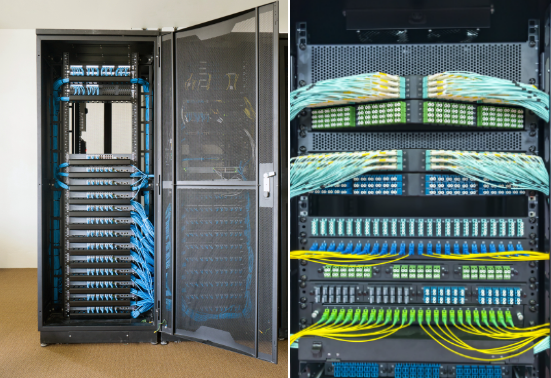
High-density data centers power everything from cloud computing and AI workloads to enterprise networking. As rack densities climb—with more servers, switches, and transceivers packed into limited space—patch cords (also called jumper cables) become critical for maintaining performance, airflow, and manageability. Poor choices lead to cable congestion, overheating, signal degradation, and difficult maintenance.
This guide covers the best patch cord options for high-density environments, focusing on materials (jackets and conductors/fibers) and optimal lengths. It draws from industry standards like TIA-942 and real-world best practices for 2025–2026 deployments supporting 400G, 800G, and beyond.
In dense setups, patch cords connect devices within racks (ToR—Top of Rack) or between nearby racks. They must:
- Minimize bulk to improve airflow and cooling efficiency.
- Support high bandwidth with low latency and insertion loss.
- Meet fire safety and environmental requirements.
- Allow easy installation and future upgrades without disrupting operations.
Common challenges include cable spaghetti, blocked vents, and exceeding de-rating factors for channel length. Slim designs, proper jackets, and precise lengths solve most of these issues.
Fiber Optic Patch Cords dominate modern high-density data centers, especially for high-speed links (40G+). They offer:
- Extremely high bandwidth (up to 800G+ with future-proofing to 1.6T).
- Long reach with low loss.
- Immunity to electromagnetic interference (EMI).
- Lower power consumption and heat generation compared to copper.
Popular Fiber Options:
- LC to LC Duplex or Uniboot: The gold standard for high-density due to the small 1.25mm form factor. Uniboot designs combine two fibers into one jacket, cutting bulk by up to 50% and improving airflow.
- MPO/MTP Multi-Fiber: Ideal for parallel optics in 400G/800G links, enabling high-density trunking.
- Single-Mode (OS2): For longer reaches or hyperscale interconnects (yellow jacket).
- Multi-Mode (OM4/OM5): For short-reach, cost-effective high-speed within racks (aqua or lime green jackets). OM5 supports wideband for future SWDM.
Copper Patch Cords (Ethernet) remain useful for shorter, lower-speed connections (e.g., 10G/25G server-to-switch):
- Categories: Cat6A or Cat8 for higher performance.
- Slim variants (26–32 AWG): Thinner than standard 23–26 AWG, perfect for density. They offer better flexibility and reduced congestion but have shorter max lengths due to higher attenuation.
Recommendation: Prioritize fiber for backbone and high-speed links in dense environments. Use copper for cost-sensitive, short intra-rack runs where PoE or simplicity matters. Fiber generally provides better long-term TCO due to scalability and lower heat.
Jacket Materials (Critical for Safety and Environment)
Data centers demand low-smoke, flame-retardant jackets to protect equipment and personnel.
- LSZH (Low Smoke Zero Halogen): Top choice for most data centers. Produces minimal smoke and no toxic halogen acids during fire. Ideal for confined, populated spaces. More rigid than PVC but safer and aesthetically cleaner.
- PVC (Polyvinyl Chloride): Cheaper and more flexible, but emits heavy smoke and corrosive gases. Suitable only for low-risk horizontal runs; avoid in plenum or high-density areas.
- OFNP (Plenum): Highest fire rating for air-handling spaces (ducts). Excellent for vertical runs in large facilities but more expensive.
- OFNR (Riser): For vertical shafts between floors; not for plenums.
Best Practice: Default to LSZH for indoor high-density data centers. It balances safety, flexibility, and compliance. For plenum spaces, choose OFNP-rated versions.
Conductor/Fiber Materials
- Fiber: Use bend-insensitive fibers (e.g., G.657 for single-mode) to handle tight bends in dense racks without signal loss. Zirconia ceramic ferrules ensure precision and low insertion loss.
- Copper: Stranded tinned copper for flexibility. Slim designs (28 AWG) reduce diameter but limit length—pair with proper de-rating calculations (e.g., TIA formulas for total channel length ≤100m).
Additional features: Push-pull tabs on LC connectors for easy access in tight spaces; uniboot or slim boots for density; armored options for rugged needs (rare in clean data centers).
Length Guide: Avoid Congestion and Signal Issues
Proper length is essential—too short risks strain; too long creates mess and airflow blocks. Patch cords are for intra-rack or short inter-rack use, not backbone runs.
Common Recommended Lengths:
- 0.5m–1m (or shorter, e.g., 30–50cm): Internal cabinet or direct switch-to-panel connections. Great for ultra-dense ToR setups to eliminate slack.
- 2m–3m: Most common for typical rack patching. Balances reach and manageability.
- 5m: Intra-room or adjacent rack connections.
- 10m (max for many slim cords): Extended needs; use sparingly in high-density to avoid excess cable.
Copper-Specific Note: Higher AWG (thinner) cables have de-rating factors. For example, 28 AWG may limit patch contribution significantly in a 100m channel—calculate using TIA guidelines (e.g., C = (105 - H) / (1 + D) where H is horizontal length).
Fiber: More forgiving on length but still keep short to reduce loss and clutter. Custom lengths (1–100m) are available for precise fits.
Best Practices for Length Planning:
- Measure the exact path: panel → cable manager → switch, adding minimal service loops.
- Standardize lengths per rack for consistency.
- Use cable management arms, vertical managers, and ½U or staggered panels to maximize density.
- Avoid running patch cords in ladder racks or under floors—they're not designed for that.
1. Fiber LC Uniboot Duplex (OM4/OS2, LSZH): Slim, polarity-flippable, excellent for 100G+ switches. Reduces congestion dramatically.
2. Slim Cat6A/Cat8 Copper (28 AWG, LSZH, Shielded if EMI present): For short copper runs with good flexibility.
3. MPO/MTP Trunks with Breakout Cords: For high-fiber-count parallel optics in AI/hyperscale racks.
4. Bend-Insensitive with Push-Pull Tabs: Ensures reliability in crowded panels.
Look for pre-terminated, factory-tested cords from reputable vendors (e.g., compliant with TIA-568, IEC standards) with low insertion loss (<0.3dB typical).
Installation and Maintenance Tips
- Cable Management: Bundle neatly with Velcro ties (not zip ties). Maintain separation from power cables.
- Airflow: Slim/uniboot designs + proper lengths prevent hot spots.
- Labeling: Color-code (e.g., by speed or function) and label both ends.
- Testing: Use Fluke or similar testers for certification.
- Future-Proofing: Choose OM5 or OS2 fiber and Cat8 where possible for 400G/800G readiness.
- Standards Compliance: Follow ANSI/TIA-942 for data center infrastructure, including pathways and redundancy.
In high-density data centers, the best patch cords combine LSZH jackets, slim/uniboot designs, bend-insensitive fibers (or high-AWG copper), and precisely chosen lengths (mostly 1–3m). Fiber leads for performance and scalability, while slim copper handles niche short-reach needs efficiently.
Investing in quality materials and planning lengths carefully reduces operational headaches, improves cooling, and supports seamless upgrades as AI and bandwidth demands grow. Always measure your specific rack layouts and consult standards for your environment.
Need custom recommendations or product sourcing? Consider your bandwidth requirements, rack depth, and cooling setup for tailored advice.
This guide is for informational purposes. Verify compliance with local regulations and test in your environment.

