


- All
- Product Name
- Product Keyword
- Product Model
- Product Summary
- Product Description
- Multi Field Search
Views: 0 Author: Site Editor Publish Time: 2026-06-16 Origin: Site
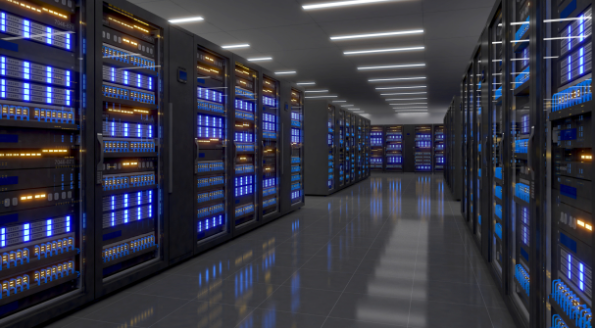
Entering a traditional computer room, cables crisscross the cabinets, and the yellowed paper labels are blurry. Maintenance personnel, holding ledgers, check each port one by one, plug and unplug jumpers, and repeatedly check for line problems - this is a true portrayal of the daily operation and maintenance of countless data centers and enterprise computer rooms. For a long time, physical layer cabling has relied on manual recording, visual identification, and experience-based operation. "Blind plugging, wrong plugging, and missed recording" have become chronic problems in the asset management of computer rooms. This not only reduces the efficiency of operation and maintenance but also hides multiple risks such as business interruption, asset loss, and loss of compliance control.
With the evolution of data centers towards high density, intelligence and intensification, an intelligent cabling management system centered on electronic patch panels (e-Infrastructure) has emerged. It breaks the single attribute of traditional patch panels that only serve physical connections, integrating capabilities such as sensor recognition, real-time monitoring, visual operation and maintenance, and automated ledgers. It completely bids farewell to the extensive "blind plugging" operation and maintenance, comprehensively reconstructs the asset management model of the computer room, and becomes a key link in the digital upgrade of modern infrastructure.
Before the popularization of electronic patch panels, the management model of traditional structured cabling systems was essentially a manually driven offline management system. Many pain points made the control of computer room assets extremely difficult.
First, the identification failed, leaving the link completely in the dark. In the computer room, ports, jumpers and cables are distinguished by paper labels. Affected by the damp, dusty and frequent plugging and unplugging environment of the computer room, the labels are prone to wear and tear, detachment and blurred handwriting. The average service life is less than two years, and the failure rate of recognition exceeds 40%. Faced with a dense network of ports, operation and maintenance personnel cannot quickly determine the link affiliation, corresponding devices and services. Plugging and unplugging operations are all based on memory and experience, and "blind plugging" has become the norm.
Secondly, the manual ledgers are lagging behind and the asset data is distorted. Operations such as port changes, patch line additions or deletions, and device migrations all require manual updates to Excel and paper ledgers by operation and maintenance personnel. Manual record-keeping has problems such as omissions, errors, and delays. Over time, the online ledgers have become seriously disconnected from the actual on-site links. Core asset data such as the usage rate of computer room ports, idle ports, and in-use equipment have completely lost control, creating a huge "management black hole".
Furthermore, there is low efficiency in operation and maintenance, and the risk of failure remains high. Data shows that 75% of network outage issues result from physical layer cabling management flaws. Under the traditional mode, a common patch cord adjustment involves processes such as checking the ledger, finding the port, verifying the link, and making post-event records. A single operation often takes more than 15 minutes. Once a network failure occurs, staff members need to check each cable one by one, which significantly prolongs the time for fault location and poses a long-term threat of outage to core business. At the same time, disordered cables will also impede the air circulation in the cabinet ducts, increase the heat dissipation pressure in the computer room, and further magnify the operational risks.
The last issue is the low utilization rate of assets and the continuous internal consumption of costs. Due to the inability to conduct real-time statistics on the status of resources such as ports, cabinets, and links, administrators find it difficult to precisely plan expansion and resource allocation. A large number of ports remain idle for a long time without being activated. When new services are launched, they can only blindly add new equipment and wiring, resulting in a double waste of hardware resources, cabinet space, and human resource costs. For government and enterprise enterprises, operators, and large IDCs that need compliance audits, the incomplete and chaotic wiring ledgers also make it difficult to implement the audit work.
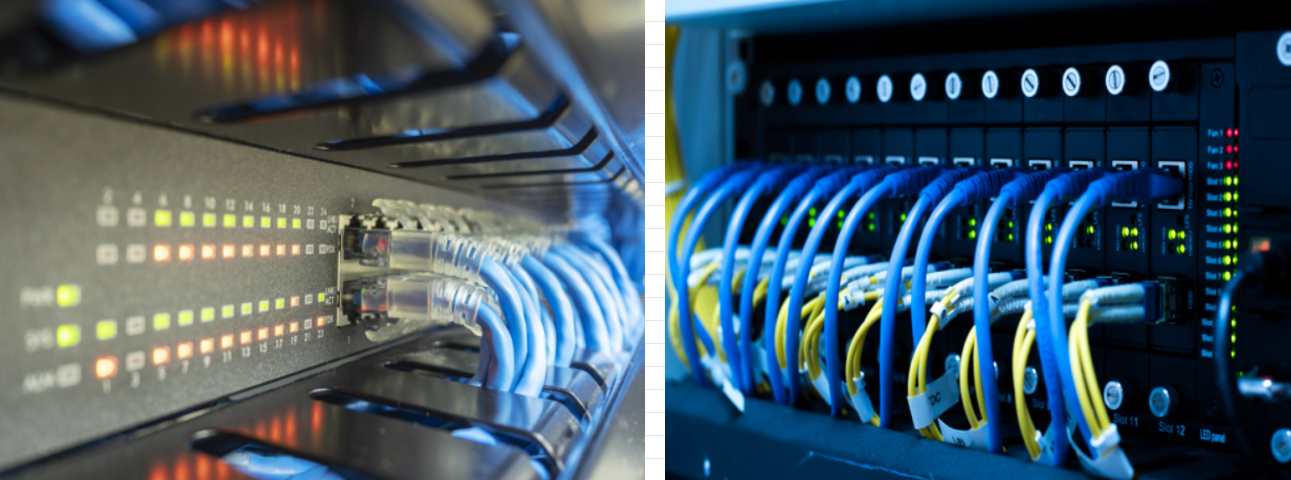
The electronic patch panel is not merely an upgrade of hardware, but rather an e-Infrastructure intelligent infrastructure system integrating hardware, sensors, software and management. Based on the traditional patch panel, it integrates sensing modules, LED indication units, and data transmission modules for each port, and is paired with a background management platform to achieve a qualitative change in the wiring link from "passive connection" to "active perception".
Its core working logic is clear and efficient: the port is equipped with infrared, microswitch or RFID identification devices, which can sense the status changes such as the plugging and unplugging of jumpers and the connection and disconnection of links in milliseconds. The hardware terminal uploads real-time data to the management platform, automatically generating link topology, operation logs and asset lists. Local LED indicator lights can also provide on-site guidance, guiding operation and maintenance personnel to accurately complete patch cord operations and eliminating misinsertion and incorrect insertion from the root.
Compared with traditional equipment, the core advantages of electronic patch panels are concentrated in three dimensions: visualization, automation, and traceability. They precisely address the management pain points of traditional computer rooms and also lay a technical foundation for the upgrade of asset management.
Computer room asset management covers multiple sections such as link management, equipment assets, operation and maintenance processes, compliance audits, and cost control. The electronic patch panel takes the physical layer as the entry point and completes the full-process reshaping from top to bottom, making computer room asset management more refined and digitalized.
This is the most intuitive value of the electronic patch panel. The system supports 3D cabinet topology, floor point map, and link panoramic view display. Administrators can clearly view the connection status of each port, link direction, corresponding switches, servers, and terminal services in the background. All link information is clear at a glance.
During on-site operation and maintenance, the system can issue operation instructions, and the LED indicator lights of the corresponding ports will light up simultaneously, precisely guiding the insertion and removal positions of the jumpers. Operation and maintenance personnel no longer need to go through thick ledgers. They can complete the operation simply by following the lights, completely bidding farewell to the mode of "blind insertion" based on experience. Even if there is a misoperation, the system will immediately issue an alarm and prompt for correction, avoiding human errors from the physical operation level.
Traditional manual ledgers have been fully replaced by fully automatic electronic asset ledgers. The electronic patch panel will collect real-time data such as port status, patch cord information, device access records, and cabinet occupancy. In case of any change in the link, the system will complete the data update within 3 seconds and automatically enter the asset list.
The platform supports multi-dimensional asset statistics: port usage rate, number of idle ports, online status of devices, distribution of cable resources, cabinet space utilization rate and other data, which are presented intuitively in the form of charts. Administrators no longer need to conduct manual inventory checks. They can keep track of the overall asset situation anytime and anywhere, solving the core problems of distorted ledgers and difficult inventory checks in the traditional mode. This ensures that every port, every cable, and every device in the computer room is "traceable".
Relying on intelligent monitoring and log traceability capabilities, the operation and maintenance process of the computer room has been standardized and upgraded. On the one hand, the system monitors the entire link's operational status 24/7. Issues such as port anomalies, link interruptions, and illegal plugging and unplugging will trigger audible and visual alarms immediately. Maintenance personnel can quickly locate the fault point, significantly reducing the average fault repair time and minimizing business downtime losses to the greatest extent.
On the other hand, all operational behaviors are traceable. Every time a jumper is plugged or unplugged, a port is adjusted, or a device is migrated, the system will automatically record the operator, operation time, and operation content, forming a complete operation and maintenance log. It not only standardizes the operation behavior of personnel, but also provides reliable basis for fault review and accountability for problems. From the perspective of labor costs, after the introduction of electronic patch panels in a thousand-port scale data center, the labor operation and maintenance costs over five years can be significantly reduced, and the indirect losses caused by downtime are also significantly decreased.
The efficient utilization of computer room assets is the core of cost reduction and efficiency improvement. By leveraging the asset analysis capabilities of electronic patch panels, administrators can precisely sort out idle ports, redundant cables, vacant cabinets and other resources, and make reasonable allocations in combination with business development plans to activate dormant assets and avoid blind purchasing and repetitive wiring.
Meanwhile, the system has excellent scalability. Its modular design is suitable for subsequent expansion and architecture upgrades of the data center. New equipment and links can be quickly incorporated into a unified management system. From the perspective of the entire asset life cycle, electronic patch panels have achieved full-process control from "planning - deployment - use - operation and maintenance - disposal", extending the service life of hardware and reducing the overall TCO (Total Cost of Ownership) of the computer room.
In addition, a complete, true and traceable electronic asset ledger perfectly meets the compliance audit requirements of industries such as finance, government affairs and operators, easily handles various security inspections, and makes up for the compliance shortcomings of traditional cabling systems.
Nowadays, technologies such as cloud computing, big data, 5G and AI are developing rapidly. The scale of data centers and enterprise computer rooms is constantly expanding, and the number of cabling ports is growing exponentially. High density, large traffic and multi-service integration have become the norm. Against such an industry backdrop, the traditional management model that relies on manual labor has long been overburdened, and intelligent physical layer infrastructure (e-Infrastructure) has become an inevitable choice for the industry.
The value of electronic patch panels has long transcended the act of "managing cables well" itself. As an important component of the digital infrastructure of the computer room, it can be seamlessly integrated with DCIM data center infrastructure management, ITSM operation and maintenance management, and network management systems, breaking down the data barriers between the physical layer and the upper-layer software systems, and building an integrated intelligent management ecosystem for the computer room. For small and medium-sized enterprise computer rooms, it simplifies the operation and maintenance process and lowers the management threshold. For large-scale IDCs and cloud computing centers, it supports large-scale cluster management and ensures the stable operation of a vast amount of business.
From "blind plugging and unplugging, offline accounting" to "intelligent guidance, automatic production management", the transformation of a single patch cord and a single port reflects the upgrade of the entire data center infrastructure management concept. Saying goodbye to the "blind plugging" era, electronic patch panels empower asset management with technology, making the chaotic data center links orderly, the ambiguous asset data precise, and the cumbersome operation and maintenance work efficient.
In the future, with the continuous iteration of the Internet of Things and sensor technology, the e-Infrastructure system centered on electronic patch panels will continue to evolve, promoting the asset management of computer rooms to move towards a more intelligent, precise and secure direction, and laying a solid foundation for the stable operation of digital infrastructure.

