


- All
- Product Name
- Product Keyword
- Product Model
- Product Summary
- Product Description
- Multi Field Search
Views: 0 Author: Site Editor Publish Time: 2026-01-09 Origin: Site

In the office, an unremarkable patch cord connects the computer and the switch, serving as the artery for data flow. This small connector determines the stability and speed of data transmission.
The "network patch cords" we usually refer to are called "plug-in flexible cords" in structured cabling standards. They are short cables with connectors at both ends, used to establish temporary physical connections between devices and network infrastructure. They are the most flexible parts of the network and also the components that are easiest to replace.
Copper jumpers are the most widely used type of jumpers. Their core medium is copper twisted pair, and electrical signals are transmitted through copper conductors.

The RJ-45 interface is undoubtedly the most common network interface in our daily life. It is the undisputed "standard interface" in the field of copper patch cords and is widely used in almost all network environments, from homes to data centers.
Rj-45 is a standardized physical interface. The "RJ" in its name stands for "Registered Jack", and the "45" indicates the interface standard number. It is rectangular in shape and has 8 metal contacts inside, arranged in a row.
The RJ-45 interface adopts a snap-on design. When inserted, it will make a "click" sound to indicate a firm connection. To remove it, you need to press the spring piece above the interface. This design not only ensures the stability of the connection but also makes it convenient to plug and unplug.
Although the RJ-45 interface supports multiple wiring standards, the most commonly used one is TIA/EIA-568, which is further divided into two wire sequences: 568A and 568B. In practical applications, the 568B sequence is more common.
The RJ-45 interface is compatible with various types of twisted-pair cables ranging from Cat5e to Cat8, and can transmit data at different rates from 1Gbps to 40Gbps as required.
The high popularity of this interface has made it the "universal language" of the network world, and almost all network devices are equipped with the RJ-45 interface.

The RJ-11 interface looks very similar to the RJ-45, but is smaller in size and is usually used for telephone line connections. Its name also follows the "registered jack" naming convention, with "11" representing its standard number.
The most obvious feature of this interface is that it is smaller in size than the RJ-45. It usually has 4 or 6 metal contacts inside, but in actual use, only the two pairs in the middle are generally used.
The RJ-11 interface is mainly used in traditional telephone systems, modems, fax machines and other devices. In the early days when the Internet was not widespread, it was the main communication interface for homes and small offices.
In the modern network environment, the RJ-11 is mainly limited by bandwidth and the distance it supports. It is based on the design of traditional telephone lines and usually can only support the transmission of analog signals up to 56Kbps, which is far from meeting the demands of modern networks.
Although the RJ-11 interface has been largely phased out in network applications, it is still important to understand it, mainly because its resemblance in appearance to the RJ-45 can easily lead to confusion. Inserting the RJ-11 into the RJ-45 port may cause damage to the connector.
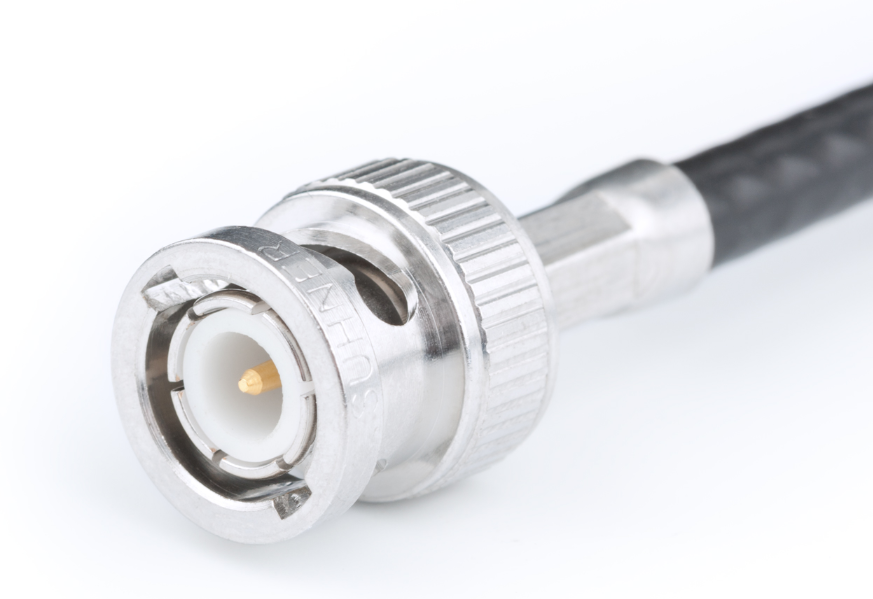
The BNC interface is a completely different type of interface. It uses coaxial cable as the transmission medium instead of twisted-pair cable. BNC is the abbreviation of "Bayonet Neiller-Concelman", and this interface achieves connection through the rotation locking mechanism.
Compared with the RJ series interfaces, the greatest advantage of the BNC interface lies in its anti-interference ability. Its coaxial structure offers better shielding performance, thus performing better in industrial environments with strong electromagnetic interference.
This interface is mainly used in professional audio and video equipment, test instruments and traditional network systems. In the 10Base2 Ethernet standard, BNC was once the standard interface used to connect thin coaxial cables.
Although the BNC interface is still in use in some specific fields, it has become extremely rare in ordinary office and home network environments.
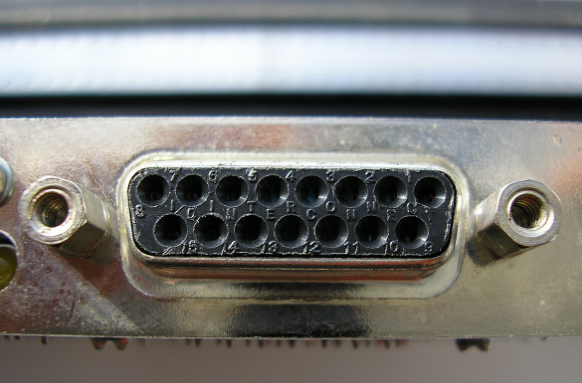
The AUI interface is a product of the early development of network technology, and its full name is "Connection Unit Interface". It is a 15-pin D-type interface, which is much larger than all the interfaces mentioned earlier.
This interface appears in the 10Base5 Ethernet standard and is used to connect a computer to an external transceiver, requiring the use of a dedicated AUI cable. Its original design intention is to provide a flexible connection method, enabling the same computer to connect to different types of media by replacing transceivers.
The AUI interface was relatively common from the 1980s to the early 1990s, but it was quickly phased out with the emergence of more advanced interface technologies.
At present, the AUI interface may only still exist in some legacy systems or specific industrial environments. For the vast majority of modern network applications, it has become history.
The 110-type interface is an insulated displacement connector, often used in telecommunication and network patch panels. It is not an interface on the terminal device, but a connection point in the wiring system.

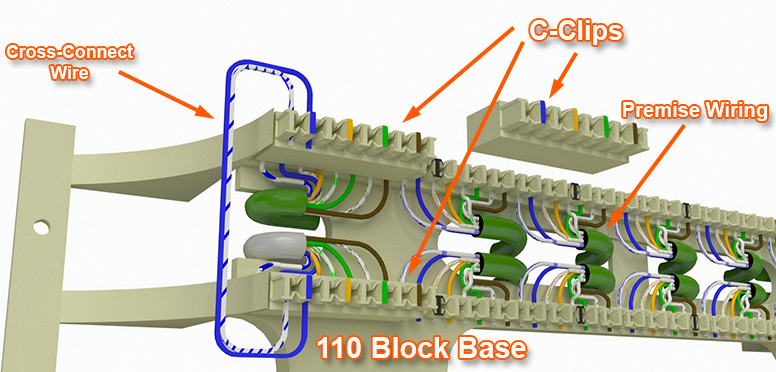
The feature of this type of interface is that it requires a dedicated wiring tool during installation. The insulation layer of the wire is stripped off and directly pressed into the metal groove of the connector. The metal sheet pierces the insulation layer to make contact with the wire.
In modern structured cabling systems, 110-type interfaces mainly appear on patch panels, used for the termination of fixed installation parts, and then connected to network devices through patch cords with RJ-45 connectors.
Modular interface is a broader concept, referring to connection systems that use interchangeable modules. In modern network devices, many high-end switches and routers adopt modular designs, allowing users to replace different interface modules as needed.
Faced with such a wide variety of copper patch cord interfaces, how to choose the type that suits your needs? First, it is necessary to clarify the application scenario: For the vast majority of office and home network environments, the RJ-45 interface is the best choice.
Secondly, equipment compatibility should be taken into consideration. Check the type and quantity of the device ports to ensure that the patch cord interfaces can match. For newly purchased equipment, almost all are equipped with RJ-45 interfaces, but some special equipment may still use other interfaces.
In terms of performance, the interface itself needs to match the category of the patch cord. For instance, Cat6 or higher-level patch cords require interface designs that can fully leverage their performance.
Finally, the future upgrade space also needs to be considered. Choosing interface types with strong universality (such as RJ-45) is conducive to the long-term maintenance and upgrade of the system.
In the future, as network technology evolves, copper patch cord interfaces may continue to be optimized, with reduced size, increased density and enhanced shielding. However, the position of the RJ-45 interface will remain stable in the foreseeable future.
The next time you insert a patch cord into a device, you might notice the technological evolution behind this small interface. From complex multi-pin interfaces to standardized RJ-45, and from specialized use to wide popularity, the evolution of interfaces is a microcosm of the democratization of network technology.

