
Views: 0 Author: Site Editor Publish Time: 2026-11-25 Origin: Site
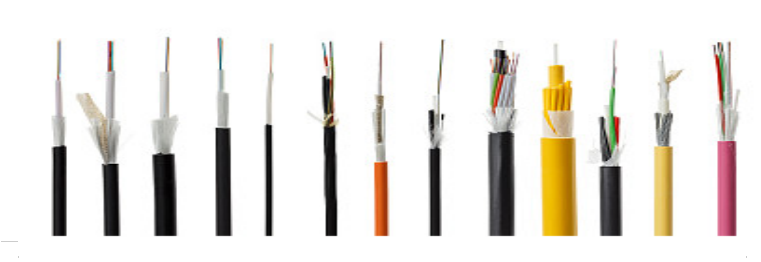
For long-haul backbone, metro WDM, FTTH, data center and submarine optical communication projects, single-mode fiber (SMF) selection directly impacts chromatic dispersion, attenuation, nonlinear effects, bending performance and maximum transmission reach. The global telecom industry follows the ITU-T G.65x series Recommendations. Different fiber types vary greatly in zero-dispersion wavelength, cut-off wavelength, dispersion slope, water peak characteristic and macrobending loss. These specifications are often confusing during tendering, supply chain sourcing and system design. This article covers the full classification, sub-types, key features and typical applications of mainstream ITU-T single-mode fibers.
Note: All these SMF fibers adopt standard 9/125μm core/cladding geometry; differences come from optical profile and doping design.
G.652 is the most widely deployed single-mode fiber worldwide. Its zero-dispersion point locates at the 1310 nm window, while 1550 nm is the low-loss window. It has four sub-categories:
G.652.A: Early specification, defined for 1310 nm & 1550 nm. It has an OH water peak near 1383 nm and cannot support full-band O+E+S+C+L WDM.
G.652.B: Extended coverage up to 1625 nm (L-band) with tighter PMD requirements for long-reach DWDM.
G.652.C: Low water peak variant. The 1383 nm absorption peak is eliminated, enabling wideband transmission from 1260 nm to 1625 nm and usable E-band channels.
G.652.D: Current industry mainstream. Fully specified across 1260–1625 nm with ultra-low PMD. Supports 10G / 40G / 100G / 400G transmission.
Applications: Terrestrial long-haul trunk lines, metro transport, data center interconnections, operator basic fiber networks.
By waveguide dispersion engineering, its zero-dispersion wavelength is shifted to the low-loss 1550 nm window.
The main drawback: severe Four-Wave Mixing (FWM) nonlinear crosstalk when multiple DWDM channels run at the zero-dispersion point. It was used for old single-channel high-speed links and is largely phased out from modern DWDM backbones.
Applications: Legacy single-wavelength systems, limited submarine legacy links; rarely specified for new projects.
Optimized cut-off wavelength design delivers ultra-low attenuation at 1550 nm with a larger mode-field diameter to suppress nonlinear effects.
Core positioning: Submarine optical cables, ultra-long unrepeated undersea transmission, the dominant fiber for transoceanic submarine systems.
Applications: Transoceanic submarine cables, ultra-long unrepeated optical links.
It maintains a small non-zero dispersion value to suppress FWM while lowering dispersion compensation overhead. A classic fiber for DWDM systems with sub-types A/B/C/D/E. Dispersion never reaches zero, which mitigates multi-channel nonlinear interference.
Applications: Long-haul terrestrial DWDM backbone, high-speed wavelength division transmission, widely used for legacy 10G DWDM networks.
Developed on G.655 architecture with an extended usable spectral range. It maintains suitable dispersion across S+C+L bands with lower dispersion slope, built for super-wideband WDM transmission.
Applications: High-capacity broadband DWDM, ultra-wide-spectrum optical transport systems.
Designed for FTTH access, indoor cabling and drop cables. It features drastically reduced macrobending loss compared with G.652. Split into Category A (G.652.D compatible) and Category B (ultra-bend tolerant, short-reach only):
G.657.A1: Minimum bend radius 10 mm, fully G.652.D compatible. General-purpose for FTTH drop cables & premise wiring.
G.657.A2: Minimum bend radius 7.5 mm, G.652.D compatible. For tight-space indoor installation.
G.657.B2: Minimum bend radius 7.5 mm, no mandatory G.652 compliance. Short-reach high-bending scenarios.
G.657.B3: Minimum bend radius 5 mm, extreme bend resistance, used in dense cabinet, wall outlet and sharp turning points.
Important note: Category A can be spliced and interoperated directly with G.652. Category B is recommended only for short access segments and not mixed in long trunk routes.
Applications: FTTH drop cables, building structured cabling, indoor ODF, fiber-to-the-room, smart home fiber access.
Terrestrial trunk & DCI → G.652.D (first choice)
Transoceanic unrepeated submarine links → G.654
Traditional long-haul DWDM → G.655
FTTH & indoor wiring with frequent bends → G.657.A1 / A2
Ultra-wideband DWDM → G.656
G.653: For legacy maintenance only, avoid in new projects
ITU-T Single-Mode Fiber Selection Comparison - English Edition | ||||||
Fiber Type | Standard Name | Zero-Dispersion | Typical Attenuation | Key Characteristics | Typical Applications | Selection Guidance |
G.652.A | Non-Dispersion-Shifted Fiber (NDSF) | 1310 | 0.35 / 0.21 | Early specification, 1310/1550 nm dual-window only; OH water peak at 1383 nm, relaxed PMD | Short-reach low-speed links, legacy network maintenance | Not recommended for new builds; used for replacement in legacy systems |
G.652.B | Non-Dispersion-Shifted Fiber (NDSF) | 1310 | 0.35 / 0.20 | Extended to 1625 nm (L-band), tighter PMD requirement | Long-haul DWDM, regional backbone | Usable; prefer G.652.D for new backbone |
G.652.C | Low Water Peak NDSF | 1310 | 0.35 / 0.20 | Water peak eliminated, 1260-1625 nm wideband operation with usable E-band | CWDM, metro multi-service transport | Good for CWDM; prefer D for high-speed long haul |
G.652.D | Full-Spectrum NDSF | 1310 | 0.35 / 0.20 (low-loss grade <= 0.18) | Fully specified 1260-1625 nm, ultra-low PMD, supports 10G / 40G / 100G / 400G / 800G | Terrestrial trunk, metro, data center interconnect, FTTx feeder | First choice for terrestrial networks |
G.653 | Dispersion-Shifted Fiber (DSF) | 1550 | 0.35 / 0.22 | Zero dispersion moved into the 1550 nm low-loss window; severe four-wave mixing (FWM) in multi-channel DWDM | Legacy single-wavelength 1550 nm long-haul systems | Avoid in new DWDM projects; maintenance of existing systems only |
G.654 (A/B/C/D/E) | Cut-off Shifted Fiber | 1310 | 0.35 / 0.16-0.19 | Ultra-low loss at 1550 nm with large mode-field diameter that suppresses nonlinearity | Submarine cables, ultra-long unrepeated transmission | Mainstream submarine fiber; also suitable for ultra-long terrestrial links |
G.655 (A-E) | Non-Zero Dispersion-Shifted Fiber (NZ-DSF) | Non-zero (approx. 1530-1565) | 0.35 / 0.22 | Small non-zero dispersion suppresses FWM while lowering dispersion compensation cost | Legacy long-haul DWDM backbone | Mostly legacy systems; new builds use G.652.D with coherent optics |
G.656 | Broadband Non-Zero Dispersion-Shifted Fiber | Non-zero across S+C+L | 0.35 / 0.22 | Flat dispersion and low dispersion slope across the S+C+L bands | Ultra-wideband DWDM, high-capacity transport systems | Selected for niche wideband applications only |
G.657.A1 | Bending-Insensitive Fiber, Category A1 (G.652.D compatible) | 1310 | 0.35 / 0.21 | Minimum bend radius 10 mm, splice-compatible and interoperable with G.652.D | FTTH drop cable, building structured cabling | First choice for access networks |
G.657.A2 | Bending-Insensitive Fiber, Category A2 | 1310 | 0.35 / 0.21 | Minimum bend radius 7.5 mm, G.652.D compatible | Tight indoor spaces, dense cabling | Preferred where installation space is limited |
G.657.B2 | Bending-Insensitive Fiber, Category B2 | 1310 | 0.40 / 0.30 | Minimum bend radius 7.5 mm, no mandatory G.652 compliance | Short-reach high-bend scenarios, panels and cabinets | Short access segments only; never mixed with trunk fiber |
G.657.B3 | Bending-Insensitive Fiber, Category B3 | 1310 | 0.40 / 0.30 | Minimum bend radius 5 mm, extreme bend resistance | Inside cabinets, wall corners, FTTR | Dense bending points and extreme-bend scenarios |
Notes | ||||||
Note 1: Attenuation figures are typical commercial values; ITU-T Recommendations specify maximum limits. For tendering and acceptance, always use the vendor datasheet and the contract specification. | ||||||
Note 2: Ultra-low-loss grades exist within G.652.C / G.652.D, e.g. the G.652.D low-loss type below 0.18 dB/km at 1550 nm. | ||||||
Note 3: Category A of G.657 can be spliced directly to G.652 fiber; Category B is recommended for short access segments only and should not be mixed with trunk fiber over long distances. | ||||||
Note 4: All types are standard 9/125 um single-mode fibers and are visually identical. Identify them by cable print legend, reel label and factory test report. | ||||||
With the rollout of 400G / 800G optical transceivers, G.652.D remains the foundation of terrestrial optical networks. G.657 keeps growing in access and structured cabling markets, while G.654 dominates ultra-long submarine routes. In international bidding, OEM supply and overseas project documentation, fiber designations must strictly follow ITU-T definitions to prevent compliance and acceptance issues.


