


- All
- Product Name
- Product Keyword
- Product Model
- Product Summary
- Product Description
- Multi Field Search
Views: 0 Author: Site Editor Publish Time: 2026-11-11 Origin: Site
Have you ever experienced this:
A jumper cable comes loose in the server room. The system shows "link down," but as you stand in front of the rack, staring at dozens of identical cables, you have no idea which one to unplug.
In traditional cabling, the network knows "if a link is up," but only veteran engineers remember "where each cable goes."
The smart patch cord was designed to solve exactly this problem.
A Smart Patch Cord is not simply "a more expensive cable" or "a cable with an LED light."
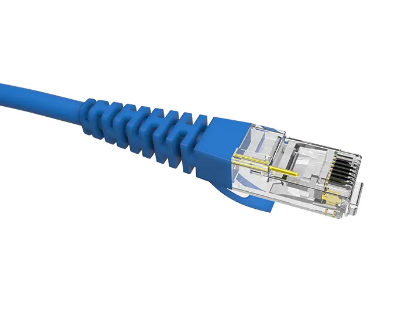
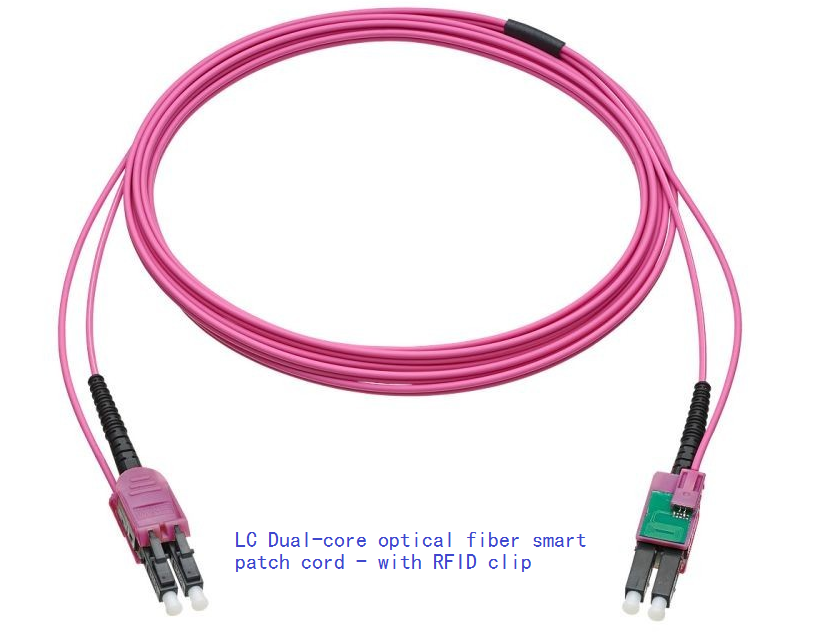
It is a "talkative cable" built on standard copper (RJ45) or fiber optic (LC/SC/MPO) jumpers, with identification components embedded directly into the connectors:
· Built-in eID chips / RFID tags
· Or dedicated sensing via a 9th conductor or contact pins
· Each cable has a globally unique ID
· When plugged into a smart patch panel, it automatically reports: "Who I am, and which Port A and Port B I am connecting"
Combined with smart patch panels + controllers + AIM (Automated Infrastructure Management) software, this forms a complete smart cabling system.
In one sentence:
Smart Patch Cord = Physical Cable + Digital Identity + Real-Time Sensing
Dimension | Ordinary Patch Cord | Smart Patch Cord |
Identity | None; relies on manual labels/Excel | Built-in chip, auto-identified |
Plug/Unplug Detection | Invisible; relies on manual inspection | Real-time reporting |
Link Relationship | Manually drawn topology, error-prone | Auto-generated end-to-end topology |
Fault Location | Unplug and test one by one | Pinpoint to the exact port in seconds |
Error Prevention | Mistakes only found after the fact | Immediate alarm + LED guidance on wrong port |
Audit Trail | Excel spreadsheets | Auto-logging: who, when, what changed |
Ordinary patch cords are "dumb devices"; smart patch cords are "sensors" for the physical layer.
There are three mainstream technical approaches:
Patch panel ports have micro-switches or metal contacts to detect "if something is plugged in."
Low cost, but cannot tell where the other end of the cable goes.
Uses special patch cords with a 9th conductor to form a detection loop.
Can identify the complete "Port A ↔ Port B" connection; can recover data after power loss.
A chip is placed inside the connector; the patch panel reads the ID via antenna or contact points.
Each cable has an identity; supports unified management of copper and fiber; currently the mainstream solution for high-grade data centers.
Typical data flow:
Smart patch cord plug/unplug
↓ Chip ID + Port Location
Smart patch panel collects data
↓
Controller aggregates
↓
AIM Management Platform
↓
Real-time topology / Work orders / Alarms / Asset inventory
The system directly shows:
· Which rack, which U-position, which port
· Which patch cord is plugged in, connecting to which switch
· Whether the link is currently active
No more "pulling cables by memory."
Engineers receive work orders on their phones:
· System lights up to guide "unplug A12 in Rack 3"
· Wrong port plugged → immediate alarm
· Operation automatically logged
Someone secretly unplugs a cable, connects a portable Wi-Fi, or touches a production link:
· Platform pop-up + email/WeChat alert
· Pinpoint exact port and time
Critical for financial, government, and carrier-grade data centers.
Link flap:
· Traditional: step-by-step ping, crawl on the floor to trace cables
· Smart: directly tells you "attenuation anomaly on LC3 fiber in B2 rack"
No need to audit every six months:
· Port utilization calculated in real-time
· Zombie cables and ghost ports automatically flagged in red
Not every server room needs smart patch cords, but in the following scenarios, once you deploy it, you won't go back:
· Data centers (IDC), private cloud rooms
· Financial core trading zones, government intranets
· Hospital HIS networks, security weak-current wells
· Large-scale campus networks (multiple buildings, many patch panels)
· Production environments with strict compliance audit requirements
For a small office with 20 ports, ordinary patch cords + labels are enough;
Beyond hundreds of physical links, manual records will inevitably fall apart.
1. Must buy as a complete system: Smart patch cords + smart patch panels + software; you can't just replace the cables.
2. Compatibility: Confirm support for Cat6A/fiber/MPO; don't just look at RJ45.
3. Dual patch panel architecture is more stable: Separate switch-side and terminal-side for scheduling without touching service ports.
4. Don't overlook label durability: The chip should outlive the cable jacket.
5. Integrate with DCIM / ITSM: Feed alarms into the ticketing system, otherwise it's just "eye candy."
In the past, patch cords were consumables forgotten after installation.
Today, smart patch cords are neurons of the physical network.
They turn the "bottom-most, easiest-to-ignore" network cables into manageable, auditable, and predictable digital assets.
The highest level of network management is not "zero failures,"
but knowing in advance which cable, at which port, needs attention — before the failure even happens.
The smart patch cord is where this journey begins.

