English


Views: 0 Author: Site Editor Publish Time: 2025-09-26 Origin: Site
In our increasingly digital world, the superhighway of information is constructed by optical fibers as thin as hair. To ensure the efficient and reliable connection of these "information vessels", two crucial components are indispensable: optical fiber patch cords and optical fiber pigtails. For network engineers, data center operation and maintenance personnel, and even communication enthusiasts, clearly understanding the differences between the two is as fundamental and crucial as an electrician must distinguish between live wire, neutral wire, and ground wire.
Many people tend to confuse them because they both have optical fibers encapsulated inside. However, essentially, optical fiber patch cords are more like "finished connection lines", while optical fiber pigtails are "semi-finished connectors". The difference in this core positioning determines the vast disparity between them in structure, connection methods and application scenarios. This article will reveal the secrets layer by layer for you and thoroughly clarify the differences between the two.
First of all, we establish cognition from the fundamental definition.
Optical fiber patch cords, also known as optical fiber connectors or optical fiber flexible cords. It is a complete cable with a flexible sheath that has fiber optic connectors (such as LC, SC, FC, ST, etc.) pre-terminated at both ends. You can imagine it as the HDMI cable or network cable we commonly use in our daily life - ready to use out of the box, simply plug and unplug to connect devices.
Role Positioning: The flexible connector of the "last mile" between devices and between devices and patch panels. Its core value lies in flexibility, convenience and mobility.
Optical fiber pigtails, as the name suggests, are the "tails" of optical fibers. Only one end of it is terminated with an optical fiber connector, while the other end is an exposed optical fiber core. This end is usually used to permanently connect with the optical fibers in the backbone optical cable by fusion splicing or other means. The pigtail fiber itself is not a complete "line", but a connector head with a short section of optical fiber.
Role positioning: The "fixed conversion interface" between the backbone optical cable and the distribution system. Its core value lies in providing a standard, stable and low-loss permanent connection point.
In simple terms, a jumper is a "wire" used for connection. The pigtail is the "head", used for termination and conversion.
The differences in definitions are directly reflected in the physical structure, which is the most intuitive way for us to distinguish them.
Dual-ended connector: The most prominent feature. Both ends are equipped with complete connectors to ensure symmetry and convenience of the connection.
Soft tight-fitting protective layer: The core fiber inside the patch cord usually has a 900μm tight-fitting protective layer, which is then wrapped with arylon fiber (to increase tensile strength) and a PVC or LSZH (low smoke zero halogen) outer sheath. This makes the jumper very flexible, allowing it to be repeatedly bent and plugged in and out.
Standardized lengths: Patch cords come in very clear and diverse lengths, such as 1 meter, 3 meters, 5 meters, 10 meters, etc. Users can flexibly choose based on the distance between devices within the cabinet.
Diverse types: According to the connector type, they can be classified into LC-LC patch cords, SC-SC patch cords, LC-SC patch cords (special-shaped patch cords), etc. According to the optical fiber mode, they can be classified into single-mode patch cords (yellow) and multi-mode patch cords (orange/water blue).
Single-ended connector: The most core feature. Only one end is equipped with a connector.
Exposed core or loose sleeve protection: The other end is a fragile core that is exposed and only has a coating layer (about 250μm), or there is a 0.9mm or 3mm tight sleeve optical fiber, usually shorter in length (within 1 meter), which is convenient for splicing operation. The pigtail itself does not have strong tensile and bending resistance capabilities.
Mainly used for fixed installation: Pigtails are usually coiled and left inside the optical cable terminal box, optical fiber distribution frame or optical fiber socket box. The end with the connector is inserted into the adapter panel, while the exposed end is fused with the backbone optical cable from the outside.
It also has type classification: Just like patch cords, there are also distinctions such as single-mode/multi-mode, LC/SC/FC interfaces.
Structural summary: Pick up a wire. If both ends have connectors that can be directly plugged and unplugged, it is a jumper. If only one end has a joint and the other end is a thin optical fiber, it is a pigtail.
Structural differences directly lead to fundamental differences in connection methods, which is also the key to the divergence in their application scenarios.
The connection of the jumper is an active connection.
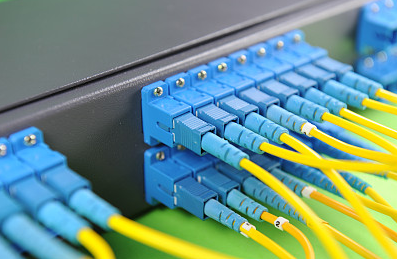
Operation: It's very simple. Just insert the connectors at both ends into the interfaces of the two devices or adapters that need to be connected respectively. When you hear a "click", it indicates that the connection is in place.
Tools: Usually, no tools are required and it can be completed by hand. It can also be directly unplugged during maintenance.
Advantages: Flexible, fast and reusable. When there are network changes, equipment maintenance or port testing, patch cords can be easily replaced.
Loss: Active connections introduce relatively high insertion loss (typically between 0.2dB and 0.5dB or higher, depending on the quality of the connector), and are prone to dust and dirt. It is necessary to keep the end faces clean.

The connection of pigtails is a fixed connection (mainly fusion welding).
Operation
1. Insert the end of the pigtail fiber with the connector into the adapter inside the terminal box or patch panel and fix it in place.
2. Align and discharge the exposed core at the other end of the pigtail with the core stripped from the main trunk optical cable in an optical fiber splicer to permanently fuse the cores of the two optical fibers together.
3. Place the fusion point into the heat shrink sleeve for protection and keep it coiled within the optical fiber fusion tray.
Tools: Professional tools are required, such as fiber optic strippers, cutting knives, fusion splicers, heat shrink furnaces, etc.
Advantages: The connection point loss is extremely low (usually less than 0.05dB), the stability is extremely high, the physical strength is good, and it is almost unaffected by the external environment. Once completed, it is permanent.
Disadvantages: The process is complex, requires professional operation, and cannot be disassembled at will. Once deployed, changes are not flexible.
Summary of connection methods: Patch cords are "plug-and-play" temporary workers, while pigtails are "settled down" permanent workers. The jumper connection is completed on-site in the computer room, while the pigtail splicing is done inside the optical fiber distribution box.
Based on all the above differences, patch cords and pigtails play distinct yet complementary roles in the vast optical communication network.
Device interconnection: Optical ports used within data center cabinets to connect network devices such as servers, switches, and routers.
Cross-connection: On the optical fiber distribution frame (ODF), it is used to connect distribution units in different areas, achieving flexible line scheduling and management.
Test Diagnosis: As test leads, connect optical power meters, OTDR (Optical Time Domain Reflectometer), and other instruments to conduct performance tests and fault location on optical fiber links.
Fiber to the Home: In the user's home, a short patch cord is used to connect the optical network terminal (ONT) to the fiber optic information panel on the wall.
In short, wherever frequent plugging and unplugging, moving or changing connections are required, patch cords are the domain.
Optical cable terminal splicing: In the optical cable terminal box where outdoor optical cables enter buildings or machine rooms, the end of the backbone optical cable must be terminated through pigtails. Each core of the main trunk optical fiber is fused with a pigtail, thereby converting the outdoor optical cable into a standard optical fiber interface within the cabinet.
Optical fiber distribution frame: Inside the ODF, optical cables from all directions are first spliced with pigtails, and the connectors of the pigtails are neatly inserted into the adapter panel at the front of the ODF. In this way, the complex external permanent connections are transformed into regular internal active interfaces, facilitating subsequent management through jumpers.
Optical fiber panel: On the wall of an office or home, the optical cable led out from the concealed pipe inside the wall is also fused with a short pigtail in an 86-type optical fiber panel box. The connector of the pigtail is fixed on the interface of the panel, waiting for the user to connect the device with a patch cord.
In short, pigtails are the "infrastructure" in optical networks. They are responsible for domesticating "wild" optical cables into "standardized" interfaces and are an indispensable part of the fixed cabling process.
To present all the differences more intuitively, we summarize them with a table:
Feature dimension |
Optical fiber patch cord |
Optical fiber pigtail |
Core definition |
Finished cables with connectors at both ends |
A semi-finished interface with a connector at one end |
Role metaphor |
Flexible signal "highway" |
Fixed "bridge piers" |
Structure |
Double-ended connector, flexible sheath, standard length |
Single-ended connector, with an exposed fiber core at the other end and a short length |
Connection type |
Activity connection (plug-in type |
Fixed connection (fusion type) |
Connection loss |
Relatively high (0.2dB to 0.5dB+) |
Extremely low (< 0.05dB |
Flexibility |
It is tall and can be repeatedly plugged in, moved and replaced |
Low, once installed, it is basically fixed |
Required tools |
Usually no tools are needed (cleaning tools are required) |
Professional tools such as fusion splicers, wire strippers, and cutting knives |
Main applications |
Interconnection between devices, cross-connection of patch panels, and testing |
Optical cable terminal splicing, interior of ODF/ terminal box, optical fiber panel |
Visible position |
In front of the cabinet, between the devices |
Behind the cabinet, inside the terminal box/patch panel |
Through the above detailed revelation, we can clearly see that optical fiber patch cords and optical fiber pigtails are not in a competitive or substitutive relationship, but rather a perfect pair of "golden partners" in optical communication networks, each performing their own duties.
We can imagine a typical data center scenario: The backbone optical cable from the urban network enters the computer room. First, on the back of the optical fiber distribution frame (ODF), technicians use pigtails to splice it, completing the "login" of the signal. Then, the connectors of these pigtails are neatly arranged on the adapters on the front of the ODF. Next, network engineers select patch cords of appropriate length and interface based on the requirements. One end is plugged into the adapter of the ODF, and the other end is plugged into the port of the core switch, thereby completing the signal "scheduling" from the external network to the internal devices.
Understanding the differences between patch cords and pigtails not only helps us accurately select the right type during procurement and avoid mistakes, but also enables us to have a clear mind and achieve twice the result with half the effort when planning network architecture, conducting daily operation and maintenance, and troubleshooting. Though small, they are indispensable cornerstones in building our high-speed connected world. The next time you open the cabinet and see those neatly arranged cables, you will surely be able to recognize at a glance which ones are the flexible "patch cords" and which ones are the silent "pigtails" providing support.


