


- All
- Product Name
- Product Keyword
- Product Model
- Product Summary
- Product Description
- Multi Field Search
Views: 0 Author: Site Editor Publish Time: 2025-07-22 Origin: Site

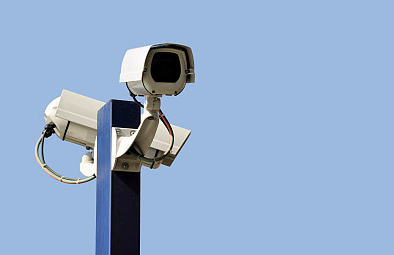
In surveillance projects, the selection of optical fiber directly impacts the system's transmission performance, stability, and cost. The type of fiber and the number of cores are two critical factors, and choosing them appropriately ensures efficient implementation and long-term reliability. This article provides guidance on selecting fiber types and core counts based on practical application scenarios in surveillance projects.
Optical fibers are primarily categorized into Single-Mode Fiber (SMF) and Multi-Mode Fiber (MMF). The choice depends on transmission distance, bandwidth requirements, and budget.
· Characteristics: Single-mode fiber has a small core diameter (approximately 8-10 microns), allowing only a single light signal mode to propagate, with low attenuation, making it ideal for long-distance transmission.
· Applicable Scenarios:
o Long-distance surveillance systems (e.g., urban traffic monitoring or cross-regional security systems).
o Transmission distances exceeding 2 kilometers.
o Applications requiring high bandwidth and low latency, such as 4K/8K video surveillance.
· Advantages:
o Long transmission distance (up to tens or even hundreds of kilometers).
o Low signal attenuation, suitable for high-definition video and large data volume transmission.
· Disadvantages:
o Higher equipment costs (e.g., optical modules, connectors).
o Higher installation and maintenance requirements.
· Characteristics: Multi-mode fiber has a larger core diameter (typically 50 or 62.5 microns), allowing multiple light signal modes to propagate, suitable for short-distance transmission.
· Applicable Scenarios:
o Short-distance surveillance systems (e.g., within buildings, factories, or campuses).
o Transmission distances within 500 meters.
o Cost-sensitive projects.
· Advantages:
o Lower costs for optical modules and connectors.
o Easier installation and maintenance.
· Disadvantages:
o Limited t a ransmission distance (typically not exceeding 2 kilometers).
o Lower bandwidth and faster signal attenuation.
· Short Distance (<500 meters): Prioritize multi-mode fiber for cost-effectiveness, suitable for small-scale surveillance networks.
· Medium to Long Distance (>2 kilometers): Choose single-mode fiber to ensure signal quality and transmission stability.
· Hybrid Scenarios: For systems covering both short and long distances, combine single-mode and multi-mode fibers, using fiber transceivers for conversion.
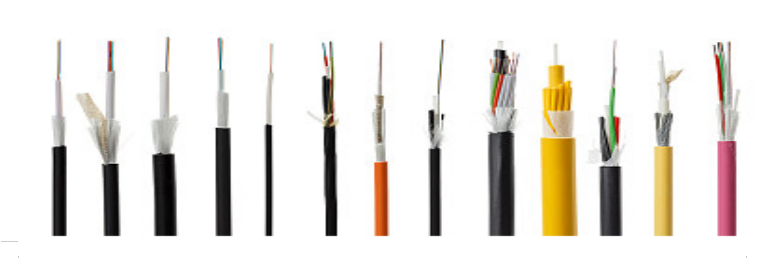
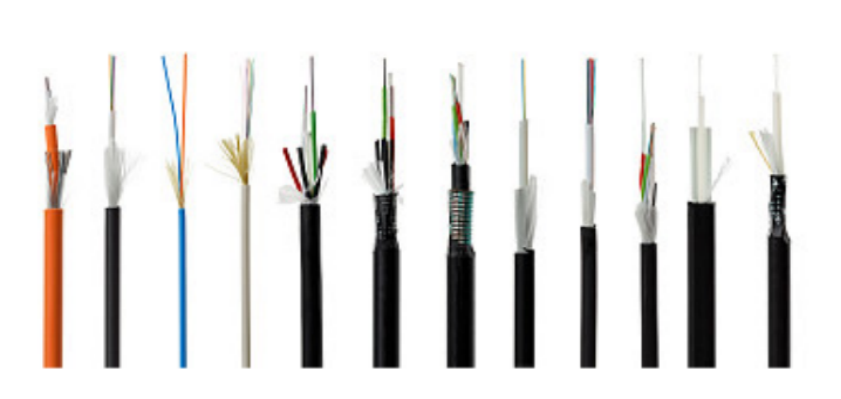
The core count refers to the number of individual fibers within a fiber optic cable, commonly available in 2, 4, 8, 12, 24 cores, etc. The choice of core count depends on the scale of the surveillance system, the number of devices, and future expansion needs.
· Number of Surveillance Points: Each surveillance point (e.g., camera) typically requires at least one core for data transmission. If bidirectional communication is needed (e.g., separate control and video signals), two cores may be required.
· Redundancy Needs: To enhance system reliability, reserve a certain percentage of spare cores (recommended 10%-20%).
· Network Topology: Star topologies may require more cores to connect to a central node, while ring topologies can reduce core count through multiplexing.
· Future Expansion: Plan for additional surveillance points or device upgrades by reserving sufficient cores to avoid rewiring.
· 2-4 Cores: Suitable for small-scale surveillance systems (e.g., single buildings or small factories) with few surveillance points and low expansion needs.
· 8-12 Cores: Suitable for medium-scale surveillance systems (e.g., campuses or industrial parks), supporting multiple surveillance points with some expansion capacity.
· 24 Cores and Above: Suitable for large-scale surveillance systems (e.g., urban traffic or airports), requiring connections for numerous devices and significant expansion capacity.
Use the following formula to estimate the required core count:
Total Cores = (Number of Surveillance Points × Cores per Point) + Spare Cores
Example: A campus has 20 surveillance points, each requiring 1 core for video transmission, with a 10% spare core allowance:
Total Cores = 20 × 1 + 20 × 10% = 22 cores
Choose a 24-core fiber to meet current needs and support minor expansions.
o Ensure the fiber type is compatible with optical modules and transceivers. For example, single-mode fibers require single-mode optical modules (e.g., 1310nm or 1550nm wavelength).
o Verify equipment support for multi-mode fiber core diameters (e.g., 50/125μm or 62.5/125μm).
o For outdoor surveillance projects, select fibers with waterproof, corrosion-resistant, and rodent-proof properties (e.g., armored fibers).
o For indoor environments, standard fibers can be used to reduce costs.
o Plan fiber routes carefully to avoid excessive bending (bending radius should be at least 10 times the fiber diameter).
o Use fiber distribution frames or splice boxes to ensure secure connections and minimize signal loss.
o Single-mode fibers offer superior performance but are more expensive, suitable for large projects with sufficient budgets.
o Multi-mode fibers are cost-effective for small to medium projects but require evaluation to ensure future bandwidth needs are met.
In surveillance projects, selecting the appropriate fiber type and core count requires balancing transmission distance, bandwidth requirements, equipment compatibility, environmental conditions, and budget. Here’s a quick selection guide:
· Short Distance, Low Cost: Choose multi-mode fiber with 2-8 cores.
· Long Distance, High Bandwidth: Choose single-mode fiber with 12 cores or more.
· High Scalability: Reserve 10%-20% spare cores and opt for higher core counts.
By scientifically planning the fiber type and core count, surveillance projects can achieve efficient, stable, and scalable network transmission, ensuring long-term reliability for security systems.

