


- All
- Product Name
- Product Keyword
- Product Model
- Product Summary
- Product Description
- Multi Field Search
Views: 0 Author: Site Editor Publish Time: 2025-10-17 Origin: Site
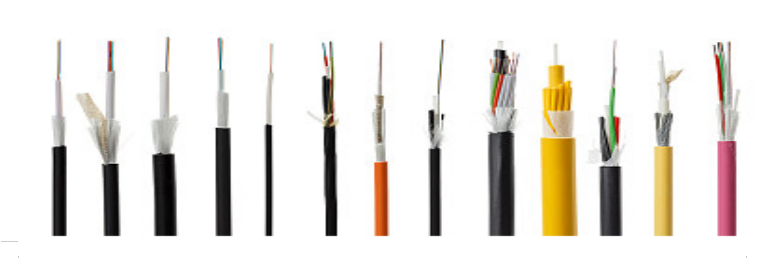
Fiber optics offer significant transmission advantages: wide bandwidth (theoretically up to 30T), long no-repeater distances (tens to hundreds of km vs. copper wire's hundreds of m), immunity to electromagnetic interference, small size and light weight, safety (non-conductive, suitable for flammable/explosive environments), wide temperature range, and long lifespan.
Definition: Large core diameter (50/62.5μm), allows multiple modes to propagate, prone to modal dispersion (pulse broadening), narrow bandwidth, suitable for low-capacity transmission. Operating wavelength: 850nm.
Transmission Distance:
10/100Mbps: ≤2000m
1Gbps: ≤550m
10Gbps: OM3≤300m, OM4≤500m
Application Scenarios: Short distances (e.g., surveillance <500m), cost-sensitive environments. Currently, usage is declining, but still applied in short-range scenarios.
Definition: Small core diameter (8-10μm), only one mode propagates, no modal dispersion, extremely wide bandwidth, ideal for high-capacity transmission. Operating wavelengths: 1310/1550nm, low attenuation (0.35/0.20dB/km vs. multi-mode's 2.5dB/km at 850nm).
Transmission Distance:
100Mbps/1Gbps: >5000m
Maximum: 150-200km
Application Scenarios: Long distances, high bandwidth needs (e.g., data centers, backbone networks). Higher cost, but superior performance; recommended for priority use.
Distance Comparison Summary (Common Networks):
| Network Speed | Multi-Mode (850nm) | Single-Mode (1310/1550nm) |
|---|---|---|
| 100Mbps | 2000m | >5000m |
| 1Gbps | 550m | >5000m |
| 10Gbps | 300-500m | >10km |
Price: Multi-mode is cheaper (~$25), single-mode is more expensive (~$50).
Distance: Multi-mode <2km, single-mode >100km.
Wavelength: Multi-mode 850/1310nm, single-mode 1310/1550nm.
Notes: Must match usage (multi-mode fiber + multi-mode transceiver; single-mode fiber + single-mode transceiver). Mixing causes packet loss/high insertion loss, not recommended.
Can single/multi-mode fiber be mixed with single/multi-mode modules? No. Results:
| Fiber Type | Module Type | Effect |
|---|---|---|
| Multi-mode | Multi-mode | Normal |
| Multi-mode | Single-mode | High packet loss |
| Single-mode | Single-mode | Normal |
| Single-mode | Multi-mode | Weak signal/failure |
Can multi-mode fiber be used with single-mode modules? No. Core diameter differences are large, wavelengths/transceiver functions mismatch, failing to ensure proper performance.
If the server room has all single-mode modules but multi-mode fiber? Best to replace all with multi-mode modules to avoid mixing and excessive insertion loss.
Cable Selection (based on core count/type + environment):
Outdoor direct burial: Loose-tube armored; aerial: Reinforced PE sheath with strength members.
Indoor: Tight-buffered flame-retardant type (ducts: Plenum/LSZH; exposed: Riser).
Vertical/horizontal: Tight-buffered/distribution/breakout cables.
Application: Indoor/short-distance use multi-mode; outdoor/long-distance use single-mode.
Fixed (fusion/mechanical): Low cost, low loss, but poor flexibility.
Active (connectors): Easy for maintenance/testing, suitable for frequent changes. Prioritize active connections as fault isolation points.
Selection Principles: For small core counts/dispersed points, use mechanical cold splicing (simple operation, low investment, ideal for FTTH/emergency repairs); fusion splicing for large-scale stability.
Advantages: >100m transmission, interference-resistant, high bandwidth, no leakage (suitable for factories/hospitals/high-security environments).
Design Notes: Consider current/future needs, compatibility, ease of maintenance; adapt to site conditions (e.g., users unfamiliar with fiber).
FC vs. SC Connectors: Can be connected using FC/SC hybrid adapters (prefer flat polish); or hybrid patch cords + adapters (adds one connector pair loss). For APC, use damage-prevention methods. Single-mode and multi-mode optical fiber products and technologies can be found on the website https://www.zoracz.com

