


- All
- Product Name
- Product Keyword
- Product Model
- Product Summary
- Product Description
- Multi Field Search
Views: 0 Author: Site Editor Publish Time: 2025-12-04 Origin: Site
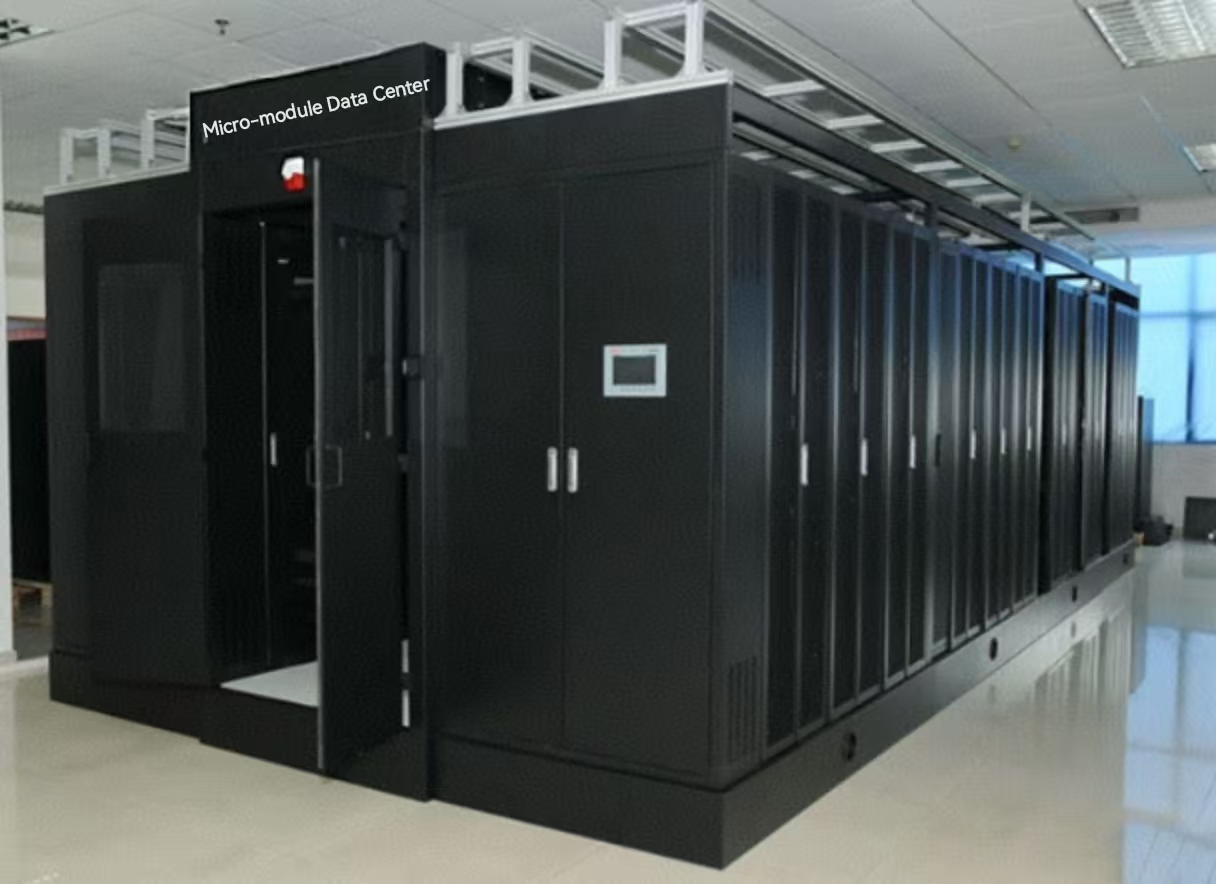
In the rapidly evolving landscape of digital infrastructure, micro-module data centers (also known as modular data centers) represent a groundbreaking approach to building efficient, scalable IT environments. These prefabricated, intelligent systems integrate essential data center components into standardized modules, enabling rapid deployment, cost savings, and adaptability. Whether for small businesses or large enterprises, micro-module data centers address the limitations of traditional setups by emphasizing modularity, energy efficiency, and smart management.
This article explores the definition, types, advantages, applications, and future potential of micro-module data centers. If you're planning a data center upgrade, discover how these solutions can streamline your operations. For product details and technical specs, visit www.zoracz.com to explore cutting-edge offerings.
A micro-module data center is a modular form of data center infrastructure that divides the facility into independent, standardized zones. Each module encompasses critical systems like power supply, cooling, monitoring, and IT racks, creating a self-contained computing ecosystem. Unlike conventional data centers built from the ground up, micro-modules are factory-assembled and shipped for on-site installation, drastically reducing construction time from months to weeks.
According to industry standards, micro-module data centers segment the physical space into uniform areas based on scale, power load, and configuration. This standardization ensures consistency and interoperability. Key integrated elements include:
Power Distribution: Redundant UPS systems and PDUs for uninterrupted supply.
Cooling Infrastructure: Precision air conditioning with hot/cold aisle containment.
Monitoring and Security: IoT-enabled sensors for real-time environmental control, fire suppression, and access management.
The result? A highly efficient, plug-and-play environment optimized for high-density computing. This design aligns with global trends toward edge computing and hybrid cloud architectures, where agility is paramount.
Micro-module data centers fall under the broader category of modular data centers, distinguishing themselves from traditional built-in-place facilities or fully integrated monolithic rooms. They support various formats, from compact units to expansive arrays, allowing customization based on needs.
Small-Scale Micro-Modules: Ideal for SMEs or edge deployments, these handle 5-20 racks with power capacities up to 50kW. They're perfect for remote offices or branch locations requiring quick setup.
Large-Scale Modular Systems: Designed for enterprise-level operations, these scale to over 100 racks and multi-megawatt loads. They enable phased expansions without disrupting ongoing services.
Other variants include containerized modules for outdoor use and rack-integrated systems that embed cooling directly into cabinets. This flexibility makes them versatile for diverse IT footprints.
Traditional data centers often involve lengthy construction, high upfront costs, and rigid layouts, leading to inefficiencies in scaling. In contrast, micro-module data centers embody an evolutionary leap through closed-loop modularity—a design philosophy that isolates and optimizes each subsystem.
| Aspect | Traditional Data Centers | Micro-Module Data Centers |
|---|---|---|
| Deployment Time | 6-18 months | 2-8 weeks |
| Scalability | Fixed expansions, high disruption | Modular add-ons, minimal downtime |
| Cost Efficiency | High CapEx, variable OpEx | Lower initial investment, predictable costs |
| Energy Use (PUE) | Typically 1.8-2.5 | 1.2-1.5, with 10-20% savings |
| Flexibility | Site-specific, custom builds | Standardized, portable modules |
This table highlights why micro-modules are gaining traction: they mitigate risks associated with overbuilding while future-proofing against fluctuating demands.
Micro-module data centers stand out for their blend of efficiency, reliability, and intelligence, solving pain points like prolonged build times and resource waste in legacy systems.
One hallmark is the ability to deploy in phases, safeguarding capital investments. Modules arrive pre-configured, allowing teams to "snap" them together like building blocks. Adjustments for rack density, floor space, or power sources (e.g., mixing AC/DC) are seamless, supporting hybrid IT environments without overhauls.
Sustainability is baked in. By employing precision row-based cooling and aisle containment, these systems prevent airflow mixing, boosting efficiency by over 12%. Overall Power Usage Effectiveness (PUE) drops below 1.5, cutting energy costs by 10-15%. Footprint-wise, they occupy just one-third the space of traditional setups, freeing real estate for revenue-generating activities.
Advanced refrigeration targets heat sources directly via enclosed channels, minimizing waste. Options like liquid cooling hybrids further enhance performance in high-heat scenarios, such as AI workloads. These innovations not only lower carbon footprints but also comply with green building certifications like LEED.
Redundancy is non-negotiable: N+1 power and cooling backups ensure 99.999% uptime. Integrated smart platforms unify fire detection, environmental monitoring, and asset management via a single dashboard. AI-driven analytics predict failures, automate adjustments, and optimize loads—transforming reactive maintenance into proactive intelligence.
This high-availability ethos suits mission-critical applications, from financial trading floors to telemedicine hubs.
The versatility of micro-module data centers spans industries, powering everything from localized edge nodes to core enterprise hubs.
Small and medium enterprises benefit from plug-and-play scalability. A single module can bootstrap a data center for under $100K, with easy upgrades as business grows. This democratizes advanced infrastructure, enabling cloud-like agility without vendor lock-in.
In massive deployments, micro-modules facilitate tiered assembly—starting small and scaling horizontally or vertically. They're invaluable for hyperscale clouds, where 100+ racks demand rapid iteration without site-wide shutdowns.
Healthcare: In hospital data centers, modules ensure HIPAA-compliant security and 24/7 availability for patient records and imaging systems. Compact designs fit constrained spaces like urban clinics.
Telecommunications: Base stations leverage integrated power for 5G edge computing, reducing latency and supporting IoT surges.
Finance and Retail: High-density modules handle transaction volumes with low-latency cooling, while retail chains deploy them for omnichannel data syncing.
Emerging applications include disaster recovery sites and temporary event infrastructures, underscoring their adaptability.
As data volumes explode—projected to reach 175 zettabytes by 2025—organizations face mounting pressure to build resilient, eco-friendly IT foundations. Micro-module data centers emerge as the future-proof choice, blending modularity, energy smarts, and AI orchestration to tackle digital transformation head-on.
They reduce total ownership costs by 20-30% over five years, accelerate time-to-value, and align with ESG goals. For businesses eyeing sustainability without sacrificing performance, these systems deliver unmatched ROI.
Ready to revolutionize your data infrastructure? Explore tailored micro-module solutions at Zoracz.com, where you'll find case studies, ROI calculators, and expert consultations. Contact their team today to assess how this innovation fits your roadmap.

