


- All
- Product Name
- Product Keyword
- Product Model
- Product Summary
- Product Description
- Multi Field Search
Views: 0 Author: Site Editor Publish Time: 2025-12-15 Origin: Site
In data centers, patch panel cabling is a core component of structured cabling systems. It connects servers, switches, and storage devices, ensuring high-performance and reliable networks. However, many data center operators often face issues with cabling chaos, leading to difficult maintenance, frequent failures, and limited scalability. This article shares practical tips to transform from chaos to clarity, helping you optimize your data center patch panel cabling.
ZORA (www.zoracz.com) is a professional manufacturer of network cables and fiber optics, providing high-quality patch panels, patch cords, and structured cabling solutions to support global data center upgrade projects.

Chaotic cabling in patch panels can cause airflow blockage, time-consuming troubleshooting, and potential downtime


Typical chaotic cabling scenario: tangled cables making maintenance difficult
Data center cabling chaos typically stems from the following common issues:
· Lack of planning: Point-to-point cabling instead of structured cabling, leading to random cable accumulation.
· Improper management: Over-tight cable ties, missing labels, or inconsistent colors.
· Disordered expansion: Randomly adding patch cords when new equipment is introduced, ignoring airflow and space.
These problems increase operational costs, reduce network performance, and affect data center availability. According to industry reports, 80% of data center failures are related to human errors, with cabling chaos being a primary cause.
By following best practices, you can quickly achieve standardized patch panel cabling. Here are the key steps and tips.
Prioritize structured cabling compliant with TIA-942 standards, including Main Distribution Area (MDA), Horizontal Distribution Area (HDA), and Equipment Distribution Area (EDA). This reduces cable congestion and supports future expansions.
ZORA's high-density fiber optic patch panels and MPO pre-terminated modules are particularly suitable for modern data centers, supporting 40G/100G/400G transmission.
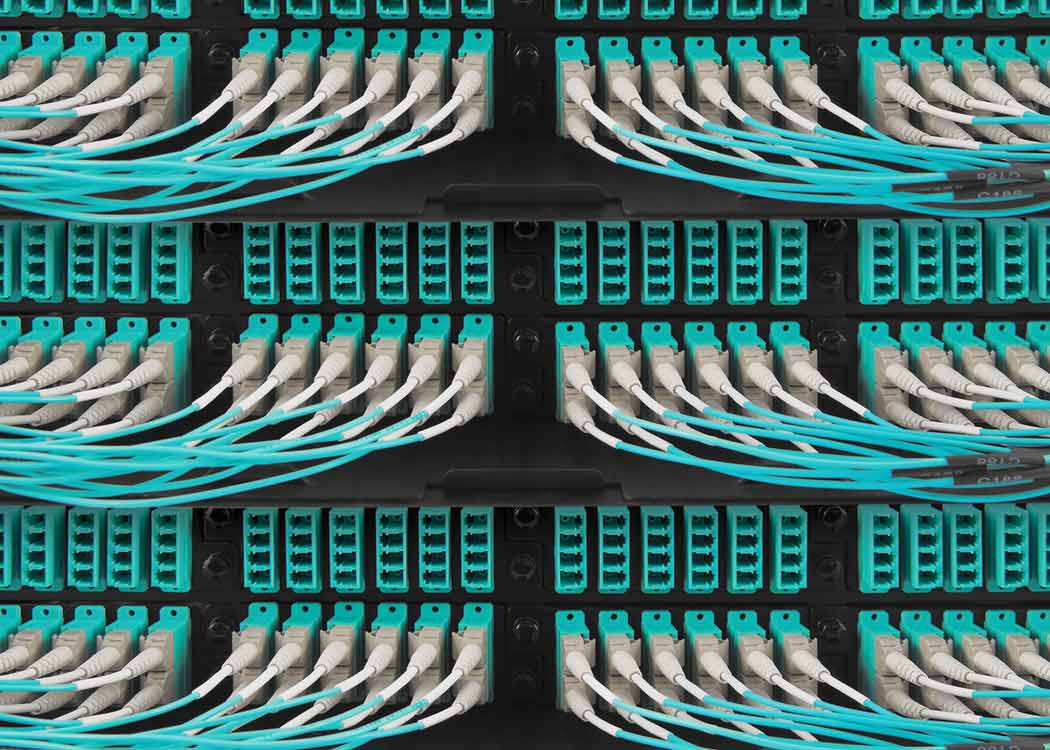
High-density fiber optic solutions for efficient data center cabling
· Reserve 20%-30% of ports and space in racks.
· Use vertical and horizontal cable managers to prevent cables from sagging and interfering with equipment below.
· Use T568B standard for copper cable termination to ensure consistency.
· Avoid excessive bending of fiber optic cables (minimum bend radius: 10 times the cable diameter).
· Secure rear cable bundles with Velcro straps instead of zip ties (to prevent signal damage).
Implement Color Coding and Labeling Systems
· Use different colored patch cords to distinguish types (e.g., blue for horizontal cabling, red for backbone).
· Apply durable labels to each port and both ends of cables, including start point, end point, and length.
· Labels compliant with TIA-606-C standard for team collaboration.


Neat patch panel connections: clear routing and labeling
· Inspect cabling quarterly and remove abandoned cables.
· Use DCIM tools or Excel to maintain cabling documentation.
· Keep front-side patch cords short and uniform to support hot/cold aisle designs.
· In high-density scenarios, choose ZORA's pre-terminated fiber optic solutions to reduce on-site termination time by 70%.


Professional rack with neat patch panel: perfect combination of cabling and management for efficient airflow and maintenance
· Over-tightening cables: Causes signal attenuation.
· Ignoring testing: Every link must be certified with a Fluke tester after installation.
· Mixing copper and fiber without separation: Increases interference risk.
By applying the practical tips above, you can transform your data center patch panel cabling from chaos to clarity, improving network reliability and reducing costs. As a structured cabling expert, ZORA (www.zoracz.com) offers a full range of products from Cat6A copper cables to high-density fiber optic patch panels, with customized solutions available.
Visit www.zoracz.com now to get the latest product catalog or consult professional cabling solutions. Let's build efficient and sustainable data center infrastructure together!

