


- All
- Product Name
- Product Keyword
- Product Model
- Product Summary
- Product Description
- Multi Field Search
Views: 0 Author: Site Editor Publish Time: 2025-07-22 Origin: Site

As of July 2025, the global data center industry is undergoing a transformative phase driven by artificial intelligence (AI), green energy mandates, and regional restructuring. This in-depth analysis explores market scale, technological advancements, regional dynamics, and sustainability challenges shaping the industry’s trajectory. For cutting-edge solutions in data center infrastructure, visit ZORA, your trusted partner for high-performance connectiity.
The global data center industry is witnessing unprecedented investment growth, fueled by AI and cloud computing demands.
· Total Investment and Structure: Morgan Stanley projects global data center investments to reach $2.9 trillion from 2025 to 2028, with 55% ($1.6 trillion) allocated to hardware (AI chips and servers) and 45% ($1.3 trillion) to infrastructure (land, power, and cooling systems).
· Annual Expenditure: In 2025, annual investments are expected to exceed $350 billion, with hyperscale cloud providers (Amazon AWS, Microsoft Azure, Google Cloud) seeing capital expenditure growth of over 50% year-on-year, and AI infrastructure rising from 15% in 2023 to 40% in 2025.
· Financing Gap: The industry faces a $1.5 trillion funding shortfall, necessitating diverse financing tools:
o Corporate Bonds: Tech giants set records in 2024 with $27 billion issued by Microsoft and $10 billion by Google.
o Asset Securitization (ABS/CMBS): Data center REITs like Digital Realty and Equinix account for 34% of financing.
o Private Credit Surge: Institutions like Blackstone and KKR are projected to provide $800 billion in targeted loans with annual interest rates of 7-12%.
· HBM Growth: High Bandwidth Memory (HBM) is critical for large-scale AI model training, with 2025 revenue projected at $34 billion, a 110% increase from 2024. Samsung, SK Hynix, and Micron report capacity utilization rates above 95%.
· DRAM Transformation: HBM’s share of DRAM revenue rises from 8% in 2023 to 25% in 2025, potentially exceeding 50% by 2030, driving the global memory market beyond $200 billion.
ZORA offers advanced connectivity solutions to support high-performance AI data centers, ensuring seamless integration of cutting-edge hardware.
Traditional Hubs | Emerging Centers | Reasons for Shift |
Northern Virginia | Dallas, Texas | 40% lower electricity costs, lenient land policies |
New York/New Jersey | Des Moines, Iowa | Over 80% renewable energy share |
· Economic Impact: Data center construction contributes 0.4% to U.S. GDP growth and creates 280,000 jobs.
· Challenges: Grid capacity is under strain, with Texas projecting an 85GW peak load in summer 2025, a 23% increase from 2023.
· China's “East Data, West Computing” Initiative:
o Hohhot Cluster: Achieves 9.6 million petaflops of intelligent computing power, with 82% green energy usage and electricity costs as low as $0.05/kWh (60% below national average).
o Policy Enforcement: National hub nodes mandate ≥80% green energy for new data centers, with non-compliant facilities facing power and approval restrictions.
o Global Expansion: Alibaba Cloud operates 90 availability zones across 30 countries, while Tencent Cloud’s Tokyo node achieves 40ms latency.
· Southeast Asia’s Rise:
o Singapore lifts data center construction restrictions, mandating liquid cooling standards.
o Indonesia’s Batam Island leverages submarine cables to Singapore, attracting $1.2 billion from Google.
· Middle East “Desert Silicon Valley”:
o Saudi Arabia’s NEOM city plans a 1000MW data center cluster, with Tencent investing $150 million in a regional hub.
o UAE introduces “Zero Carbon Data Center Certification,” requiring PUE ≤1.3.
· North Africa Hub Development:
o Morocco’s Tangier Port secures NVIDIA and Naver investments for a 500MW AI data center, leveraging proximity to the Strait of Gibraltar.
o Egypt’s Cairo upgrades legacy facilities post-2024 nationwide outage, adopting Huawei’s modular data centers.
Metric | Air Cooling | Liquid Cooling (Immersion) | Improvement |
PUE | 1.5-1.8 | 1.05-1.15 | 30%+ reduction |
Rack Power Density | 15-20kW | 50-100kW | 3x increase |
Water Usage | Millions of gallons/year | 30-50% reduction | Significant savings |
· Commercial Adoption:
o Microsoft’s Sweden data center recycles waste heat to warm 40,000 homes.
o Alibaba Cloud’s Hangzhou cluster uses fluorinated liquid immersion cooling, reducing energy consumption by 75%.
ZORA provides innovative liquid cooling solutions to enhance data center efficiency and sustainability.
· Dynamic Optimization Systems:
o Google’s DeepMind “Cooling AI” adjusts pump flow and fan speeds in real-time, saving $30 million annually in electricity costs.
o Huawei’s FusionModule predicts failure rates, boosting operational efficiency by 40%.
· China: Classifies data centers as high-energy industries, enforcing carbon quota trading.
· EU: The Energy Efficiency Directive mandates PUE ≤1.3 and WUE ≤0.4L/kWh for new data centers by 2025.
· U.S.: Federal tax credits cover 30% of renewable energy infrastructure costs.
· Hohhot “Computing Power Vouchers”:
o Annual $17 million subsidy for computing costs ($0.015/P/hour).
o $400 million industry fund leverages social capital at a 1:5 ratio.
· Dublin, Ireland:
o Lifts ban on new data centers, requiring 100% green energy and waste heat reuse for communities.

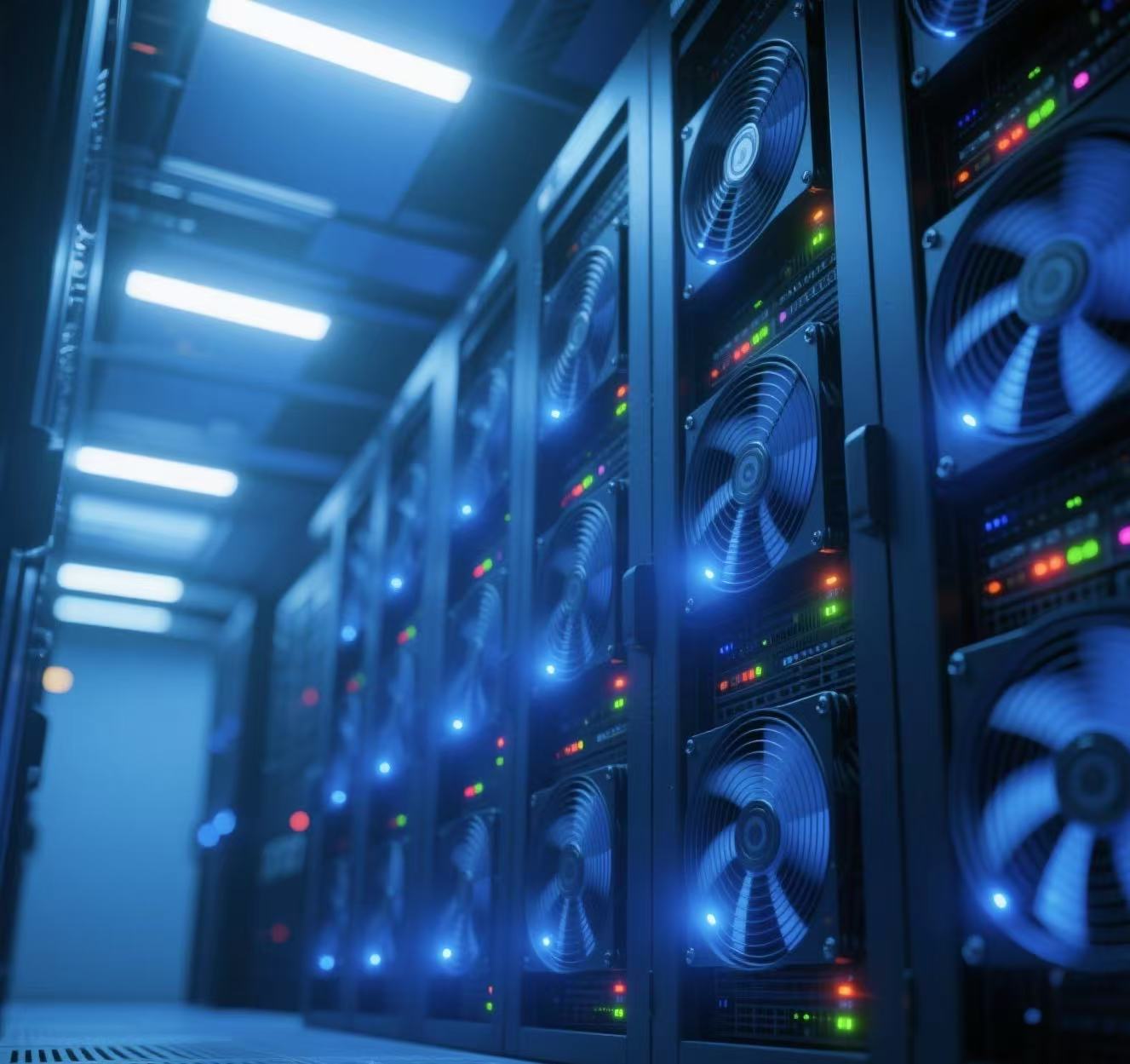
Global AI compute demand grows over 200% annually, while grid expansion lags at 5-8%, leading to power restrictions in Ireland and Singapore.
Financing Costs vs. Return Cycles:
Private credit rates reach 12%, with data center ROI cycles spanning 7-10 years.
Technology Iteration vs. Legacy Upgrades:
Retrofitting air-cooled data centers for liquid cooling requires 3-6 months of downtime, with bio-contamination control costs rising 25%.
Cross-Regional Collaboration:
The EU’s “Pan-European Computing Network” redirects computing loads from Germany to Norway’s hydropower-rich regions.
Sovereign AI Architecture:
Saudi Arabia and UAE leverage national funds to control local data centers, reducing foreign dependency.
Circular Economy Models:
Microsoft partners with agricultural firms to use data center waste heat for greenhouse farming, reducing emissions while creating value.
The data center industry in 2025 is characterized by high growth and high constraints:
Growth Drivers: AI compute demand fuels hardware investment, and emerging markets capitalize on sovereign AI strategies.
Constraints: Green energy policies reshape geographic patterns, with liquid cooling becoming mandatory.
Winning Factors: Enterprises must balance compute density (liquid cooling, intelligent operations) with sustainability compliance (green energy, carbon footprint), while governments address lagging power infrastructure and cross-border data flow barriers.
Future Trends: By 2030, the industry will form a three-tier structure: U.S.-China dual-core technology leadership, emerging markets absorbing capacity, and green energy and liquid cooling defining entry standards. Those unable to adapt will exit the competitive stage.
Data Sources: Morgan Stanley Q1 2025 Industry Report, IDC Global Data Center Tracker, CAICT Computing Infrastructure Whitepaper, EU Energy Agency Policy Database (as of July 2025).
For advanced data center solutions, partner with ZORA to stay ahead in this dynamic landscape.

